Friday, April 24, 2020

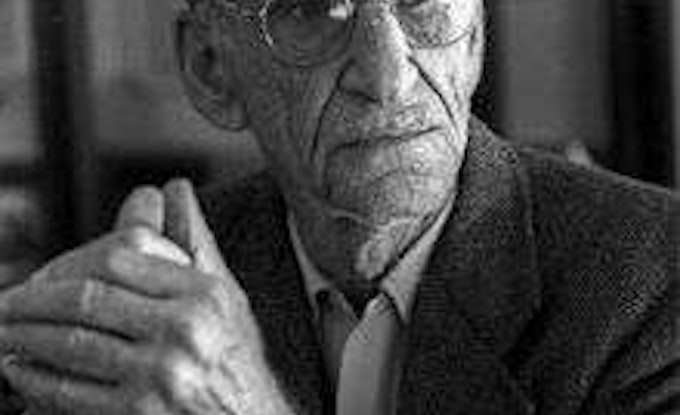
ANTHONY HECHT


www.loc.gov/static/managed-content/uploads/site...
I confess I was in love with my adjectives, metaphors and unhinged diction when I was a younger man attempt to write in the shadow of the Eliots, the Ashberys, the Stevens of the poetry world. Needless to say (but to be said anyway) I wrote a great deal of poems that could be blue penciled into submission, as many, many of the things I composed were done on the fly, in full improvisational rant. Most of us are lucky enough to survive and learn from their youthful indulgence, and my preference in tone , for my work, is to more concise, terser , more direct in my treatment of the world. It's an ongoing experiment in phenomenological terrorism, but we can conclude that my later offerings seeks to get back to the data, the situation under a poem's consideration. 

One longs for something to come from their keyboard that's less abstract and more at one with the material realm, a project destined to fail--one cannot step outside their own skin to observe oneself in their habitual habitat--but it is the attempts that are worth considering, pondering, it is the art that adds to our knowledge of the things we don't know. For others, of course, poetry is a means to classify and categorize and index people, places and things; it is a means to conquer the world and reduce to quantifiable data. Poetry here is means of missing the point entirely.
Sadness. The moist gray shawls of drifting sea-fog,
Salting scrub pine, drenching the cranberry bogs,
Erasing all but foreground, making a ghost
Of anyone who walks softly away;
And the faint, penitent psalmody of the ocean.
One needs to admit to Anthony Hecht's mastery of the carefully articulated tone of his work , and appreciate as well the limits he observes when constructing correlatives between interior states with the material world. Not pompous, not grandiloquent, not bombastic, Hecht's poem "Despair" finds a way to make the sluggishness of the human spirit resemble the turns of the day--

Gloom. It appears among the winter mountains
On rainy days. Or the tiled walls of the subway
In caged and aging light, in the steel scream
And echoing vault of the departing train,
The vacant platform, the yellow destitute silence.
The adjectives are perfectly selected and fitted like the smaller, finer diamonds in a larger arrangement of vaguely tarnished gems, with the intent being to remind you, I suspect, that more often than not one has found themselves caught unaware that the warm afternoon has taken on a sudden chill in just the minutes it took for the sun to take a late afternoon shift of position. It does just that, but it seems a bit false; the perception seems padded by the slightest degree.

But despair is another matter. Midafternoon
Washes the worn bank of a dry arroyo,
Its ocher crevices, unrelieved rusts,
Where a startled lizard pauses, nervous, exposed
To the full glare of relentless marigold sunshine.
What I recognize over anything else is a world that seems to exist only for it's elements--an Edward Hopper universe of subdued tones, melancholic hues and diffuse light-- to illustrate a mood that itself seems more imagined, fanciful. The language eschews the chance to be vivid and naked with the sadness it attempts to corral and instead decorates the psychology. Phrases like "Washes the bank of a dry arroyo" or"To the full glare of relentless marigold sunshine" ,  hang lifeless like waiting room art that is nebulous and comforting; the real experience is abstracted, obscured, defused of potential. This makes me think less of an accounting of what one has felt and found suitable expression for than it is a rumor of something having happened . This is the kind of language one comes upon with someone who has something on their mind they aren't comfortable exposing to an honest art. Measured, well crafted, balanced, similes and metaphors synchronized , but without a single provocative notion. You're left to admire the structure of the thing, the finesse of the inner mechanisms, and leave the poem without a hint of real feeling.
____________________________________________________________________________

A little guilt mongering is just what you need to deliver several stanzas of applause ready morality. Anthony Hecht loves to bask in the glow of Points Already Made.The idea seems to be that even with the advance of decades since a horrific event, later generations still bear a moral responsibility for atrocities committed in their country's name; one cannot consider themselves excluded from the fatal commotion that had come before--there is no statute of limitations as to when no longer carries the blood stains and the culturally inscribed rationalizations that made the murder of millions a massive event performed both for the greater good and a fulfillment of an historical inevitability. There is no generational privilege; whatever one tries to do in occupation, hobbies, lifestyle, the routines of contemporary life, on grand and smaller scales, echo the terror, whisper of one's connection to the evil that was perpetuated, implies without subtlety one's responsibility to change the culture to the true nature of a collective personality that made the unthinkable an historical fact we must confront. 

Prepare to receive him in your home some day:
Though they killed him in the camp they sent him to,
He will walk in as you’re sitting down to a meal. 
This ending is straight from the Twilight Zone, which would have been fine if this were an early sixties television show emphasizing a then-controversial Humanist perspective. Controversial ideas, though, are mainstreamed over time, and this poem seems to occupy a space on the shelve of Subjects No Sane Person Would Argue With.
Hecht, though, is heavy handed in this delivery of what is history lesson and moral that would make for an easy round of applause; one can't argue with his politics or his sense of morality, but the parallelism he uses goes quickly from being an effective device to a trick used a few times too many. As with some other poems of his I've poured over, there is a smugness in his work I find grating, even on points I would otherwise agree without pause or reservation. Hand wringing is what occurs to me, a routinely glum observation that humans are fully capable of being evil , despicable bastards, and that the people who make such monstrosities possible are likewise horrible. This would make a fine speech,but it makes for a poem that wears it's morality like a loud suit of clothes , clashing and garish colors that obscure substance. 

There's a clue in the Martin Luther quote Hecht uses as an epigraph, ,Martin Luther’s translation of John 19:7 (“We have a law, and by that law he ought to die.”)An ironic counter point, I think, given the discussion that's already go on ; Luther believed in a higher order and a Higher Law , and was inspired to disregard Papal rule in pursuit of what he considered God's true nature and calling. Laws are written for the convenience of man's convenience, greed and fouler purpose, and the laws the ancient Jews obeyed to justify Christ's crucifixion, as well as the legal and moral right Nazi's claimed for their genocide were cruel, thin fictions that collapsed under historical weight. Hecht seems to want to set us for how consistently small minded we are in our variety of evasions and excuses for the horror we've done; the poem, obviously, reminds the reader that we cannot escape what we've done to one another; my problem with the poem isn't the moral, but the delivery in general--hammering, heavy, lecturing. It's a message without grace . 

A large part of his problem may have been his choice of writing this as a sestina, which limits variety.He's obliged by requirement to repeat phrase and idea in conspicuous variations that extinguish the possibility of surprise. Good poets work through their metaphors and themes so that a premise they begin evolves into something larger later in the work--a reader, when the poems are successful, gets an idea of how ideas are not fixed things, unchanging, but rather change when made to interact with a crucial "otherness" that coincides a verse's codified vernacular. There can be, I think, some playfulness in the language that can make even the most baleful subject stick with you without cramming your face deep into the moralizing. Hecht's choice of sestina, though, coincides with intent. He obviously didn't want his audience to miss his intended ironies an

Tuesday, April 21, 2020

The Collected Poems of Robert Creeley, 1945-1975 by Robert Creeley
There's a collection of verse by a great American Poet, Selected Poems 1945-2005 by the late Robert Creeley, and I'm obliged to go out and buy it. My paperback editions of his books are, sad to say, falling apart with that rare affliction for poetry volumes, poetry books with a cracked spine.It's a fine time to remember Creeley's mastery of the terse lyric poem, a major characteristic in a time when "lyric"for most writers mean lazy associations, odd line breaks and a verbosity that is more about extended a line than treating a subject.

Myself

What, younger, felt
was possible, now knows
is not - but still
not chanted enough -

Walked by the sea,
unchanged in memory -
evening, as clouds
on the far-off rim

of water float,
pictures of time,
smoke, faintness -
still the dream.

I want, if older,
still to know
why, human, men
and women are

so torn, so lost,
why hopes cannot
find better world
than this.

Shelley is dead and gone,
who said,
"Taught them not this -
to know themselves;

their might could not repress
the mutiny within,
And for the morn
of truth they feigned,

deep night
Caught them ere evening . . ." 


Robert Creeley's poetry was the terse vocabulary of a man who feels deeply and yet has hardly a voice to equal the sensations that warm or chill his soul. It is the poetry that exists at the margins of and in the spaces between the huge language blocks of what is commonly deferred to as eloquence: they are thoughts, full formed and fleeting in their unmediated honesty of a first response to a new things or upsets, a poetry where heart and mind have no natural boundaries.


America

America, you ode for reality!
Give back the people you took.

Let the sun shine again
on the four corners of the world

you thought of first but do not
own, or keep like a convenience.

People are your own word, you
invented that locus and term.

Here, you said and say, is
where we are. Give back

what we are, these people you made,
us, and nowhere but you to be.


I sometimes consider the poet to be a film editor of perception, isolating key images and spoken lines in their spaces and arranging them in sweet and near silent succession where mood and sentiment are restrained but clearly present, nakedly expressed, without embarrassment.The surprise of his poems is that he seems to bring you to the "thing itself", without the contextualizing and taming rhetorics that buffer our responses; this is his ability to move you in ways that never feel like coarse manipulation. Creeley's was a vision with sharp-stick wit, the straightest line to a truth no one will admit seeing.

Thomas Gunn called it a "eloquent stammering." I can't think of a better superlative.

Tuesday, April 14, 2020

Kevin Young


The poem Elegy, Father's Day by Kevin Young,is nothing less than a low-rise building under construction, bare girders and preliminary piping through which a stiff wind blows. That's the point, I suppose, a creaky construction of unmoored signifiers requiring brick, mortar, lumber, wiring , the placement of windows so it can finally resemble something useful. Kevin Young's terms on on that stiff wind, bringing to mind the Hollywood cliche , the stock scene when some one's career is in the tank: a newspaper with their name on it shown being blown down the street, crumbled up, into the gutter. Kevin Young's scaled fragments seem part of a set of memories that are no longer whole:


From above, baseball diamonds look
even more beautiful, the pitcher's mound

a bright cataract.
The river wavers

its own way—see
where once it snaked.

Shine me like a light.

Ladies & Gentlemen, we are flying
just above turbulence.

The roads like centipedes,
their flailing feet.

How many, thousands,
to fall.

Below, parcels & acres blur
like family plots.

100 knots.

Cities bright
in the blinding dawn.


In Superman Returns, the Big Blue Guy tells Lois Lane at one point that he can hear everything that's being said, and from there the movie turns into a computer generated montage of swirled and confusing images and bits of conversation, the inane mixed with the desperate.One is meant to believe, apparently, that part of what makes Superman super is his ability to make sense to find what is meaningful and worth paying attention to out of the roiling , bubbling babble and so save humanity. Although I lack Superman's heightened finesse in detecting the important matters in the sediment of streaming babble, there's nothing here to catch my ear, no voice, or voices that are uttering anything of interest. The fault isn't with these things and the associations they might have for Young, it is Young's fault for not making them interesting.

This makes me think that nothing more was being done other than staring out the window for a long time waiting for something poetic to traipse by, to blow by, to drive by, that a sequence of minor events might become a narrative unity. It all does, no doubt, in Young's explanations for the poem and the guided tour he can offer us stanza by stymied stanza, but this poem, as it tries to breath and not fall apart in a the noisy terrain Young placed it in , is a species of Found Art. But where an hose fire hose nozzle , a bottle cap or a tarnished Gulf sign have visual design properties that in themselves are interesting enough and can draw associations from an audience's respective recollections of their own history, Young's phrases are not special enough, are not uniquely mysterious to make one curious to what thinking lies behind the slight writing.

All told, this piece is more gesture wherein he shows us who he's been reading but misses the point of their stylistics.

Tuesday, April 7, 2020

Oppen


George Oppen
We’ve been reading Michael Davidson’s superb anthology of George Oppen’s verse, Collected Poems, forcing me to the keyboard to ponder some connection with Wallace Stevens . with whom he shares an obsession with how the human personality tries to speak to those things that will never let themselves be revealed.The massive solitude in Oppen's work, wholly devoid of Romantic despair, seems an intrinsic part of his recognition that the Earth itself can never be known.Oppen is connected to Wallace Stevens, I think, in that there is awareness that language has the habit of taking on the personality and delusions of the speaker and thus disguises nature, "reality" under layers of wordy assumptions that miss the mark of the mystery of experience. Stevens, though, exults in his search and wonder, and views the finalizing that eludes him as occasion for joy, wonder, a reason to intensify one's attention on the very nature of being in the world; Stevens thinks it enough for the witness to be staggered by the realization that existence is absent of final, metaphysically fixed perimeters, and that one should relish the more profound miracles in the details of their own senses.

Oppen comes to know his loneliness, and there is in his work some longing for old myths that gave comfort to a restless mind. Oppen, though, denies the lure of nostalgia and presses forward on some path that has an end only beyond his own death, that language will be restored to it's ability to correctly assess the world and ourselves in it, and avail us with some ideas of assembling a world that operates on good acts and deeds and not a high rhetoric that amounts to sighing, whimpering and casual bad faith, in Oppen's estimation.I'd be interested to hear your ideas regarding Oppen's path that leads beyond his own death, as that seems alien to his poetry, at least as far as it refers to poetry.A bad habit of mine is to use dramatic language when I'm the full boil of writing, so forgive me for possible vagueness and overstatement. I am thinking , of course, of Oppen's leftist politics and his association with what's come to be called the Objectivist movement, spearheaded by Louis Zukofsky, and whose members, as such, included Charles Reznikoff, Carl Rakosi, with older American modernists such as W.C. Williams and Pound having close affiliations with this loosely defined group of writers.In the broadest sense, Objectivist writers, following Zukofsky's lead, developed styles that evolved from Imagism, but sought to come up with a kind of unblinkered epic poetry that wasn't hampered the symbolic obscurantism. The idea was to write, according the poet's personality, a verse that presents concrete things and realities not for the purpose of making them mere props for some metaphorical system whose results wind up with dead tropes and forgone conclusions that reaffirm only bad faith, but rather gloried in those things and their uniqueness.
Zukofsky, along with Charles Olson, sought to expand the aesthetic into the social areas, the geographical, into areas the names of which define us in relation to nature and the world humans build within it. Where a modernist like Pound (as opposed to Stevens) sought to legitimize the poet as an insurmountable authority on the exactness of nature and meaning and hence establishing him or her as an arbiter of Power, Oppen's wanted to use his poetics to make the discerning habit of mind, the ability to use language in unsentimental ways, to the general population. This would have been his ultimate gift of love, and there is a tone in his writing that I get, sometimes, that he is aware that such revolutions are started in one's lifetime but often not finished. I've no doubt that he wished that what started as a preferred compositional practice would grow into a self-renewing alignment of the population's right-sized perception of itself within Nature. Some of that loneliness might as a result abate. Zukofsky, Oppen and the work of the Objectivist Poets, as such, are a huge influence on the work of the L=A=N=G=U=A=G=E Poets, whose ranks include that charged inversions,reversals and redirected practice of Ron Silliman, Rae Armentrout, Bob Perelman, and Michael Davidson himself. It's a stretch to refer to these poets as a school or movement at all, which is why I preface the remark with the tired qualifier "In the broadest sense...."
These poets come at time when the American modernists were getting older and their ideas had been assimilated by a younger generation. The poets share some similar attitudes regarding poetic language and the quest for unassailable truth, but calling them a coherent movement is a stretch, as you say; literary critics, needing to classify styles and writers, pounced on "Objectivism" as a the term to use, and in fact wrote the manifesto, in the form of their varied systematized remarks, that Zukofsky et al never got around to composing. The poets were off into the American wilderness, distinct in style, attack, voice. Oppen's attraction to the general attitude with the Objectivists, to compose a phonologically responsible poetry, is understandable, but his personality and his style are his own, after the association. It might also be said that Oppen's poetry is the best of this generation of writers
L=A=N=G=U=A=G=E poetry, unlike what's been called Objectivistism, was an actual poetry movement, replete with manifestos, several anthologies, and an intimidating backlog of criticism and commentary by the poets themselves addressing what are conspicuously shared ideas and aims, stated succinctly as this: the theme of Language poetry is language.It was an inevitable development, I'd guess, coming out of the Sixties new left affiliations, and riding in along the tide of structuralist -inspired art where making a consume aware of the art's own mechanisms and intentions, was a common card to play; along with the writings of Ron Sukenic, Barthelme, and the films of Godard and Snow, Language Poets seemed to think that exposing the mechanics of syntax and grammar would make readers aware of how they're being manipulated.
Not a bad idea, perhaps, but it's something that expressed whatever was interesting it had rather quickly. Lately, it seems more a strong addition to a poet's resume so they can acquire an academic position. Not surprisingly, there are younger student poets who've been seduced into this style, and one prays they move from the semi-Marxist psycholinguistic braying of that peculiar school and find their own voice, through which they can trust the authority of their senses

Thursday, March 5, 2020

TWO ABOUT MICHAEL RYAN

Someone recently tossed out the coffee mug I kept at work, a cracked and infirm piece of pottery that had seen better days and superior cups of coffee than the foul brew that fills the break room with a the aroma of soggy scorched grounds. I didn't, though, mourn a bit, did not muse with tortuously extended metaphors over what the loss represented symbolically, was not , generally, willing to attempt the ironic connection between the manufacturing process and region of origin with ego-political concerns that are relevant, it seems, in another conversation.

What I thought was that crap, my cup is gone, dirty and cracked as it was, someone tossed my private property, it was mine, ugly and gross as it had become, it was my cup and it was my coffee that would have been in it on the fifteen minute break I am allowed by law but no, I am denied that, I am without coffee and now I have to go to the machine in the hallway and drink something less savory than the brackish blend our staff coffee pot contains. And that was it; my concern was local, not global, my solution was to move on to the next indicated thing, getting coffee from the machine and some minor-key grousing, not, shall we say, writing a paean to a cup that is, when all is said in done, only a material stand in for other matters, global and personal, that poet Michael Ryan can drum up in the composing of his poem "Mug".
There is a sense that Ryan wants to offer up a concentrated rant of a kind, an Albert Barth style tirade (or offer a tribute to John Ashbery with an investigation of how his mind associates the present world with the chambers of history the mind stores in so many sequestered boxes) in miniature, but even here this poem swells with literary bloat. Nothing sounds natural; there is no comic timing, no pauses for effect. There is the padded vocabulary of winking sarcasm that hides a contempt for the whole subject matter of ownership and the constructed ironies contained in the concept with grandiloquence , the hollow elegance of someone writing until a good line appears. All told, Michael Ryan would have done better by reducing this poem to something much sparser, nearly skeletal.Better to leave the bloggy-asides out of the poem, I think, and leave the reader something truly tactile, visual and genuinely provocative as a result. The poem has lots of one liners, but lacks a single idea we can walk away with.

_______________________________________

Michael Ryan admires Emily Dickens, it appears, but there’s nothing in his poem“My Young Mother” that comes near the compressed internalization the Amherst mistress created with her jump-cut , cat- footed leaps between ideas. Dickens, for sure, was a writer one stayed with, labored over, argued with in terms of the uncompromising nature of the style and then and only then grasped her cadences and the burrowing revelations they contained; one was rewarded as well with a stinging wit that was properly lacerating once it was released from it’s coded sheath.

There are, to say the least, considerable rewards for the close inspection of her unusual diction and involuted construction. Ryan fares much less trying to write with a suggestion of her style—it’s the subject for emulation that is the least likely to produce interesting results—and where Dickens had the skill to keep one guess, unsure, strung along as to what her point would be or what it was that might be revealed (the peculiar joy of Dickens is the teasing, the delayed gratification), Ryan’s poem confesses his meanings and intents readily. There is no suspense in the game here, nothing that caste a different light on memories that are clear but clouded somehow with intervening events. There is, instead, a mannered and stiff rendering of a childhood memory I can’t help but think unfolds from Ryan with too much detail, 

What she couldn't give me
she gave me those long nights
she sat up with me feverish
and sweating in my sleep
when I had no idea whatsoever
what she had to do to suffer
the pain her body dealt her
to assuage the pain in mine.


The writing is too fussed-over, the particulars too polished, the narrative constructed in such a way that one knows that there is a punch line coming by the usual literary routes.Ryan continues an argument he seems to have been having with his mother over the years and finds himself in the grasp of swooning revelation that a handy device has landed at his feet to aid him in bringing a coherent (if game footed) line to his left over recollection. He senses his mother resents her requirement to remain with her sick child but remains so through an instilled sense of obligation and duty, instincts she likewise resents.

That was a noble privacy—
her mothering as a practice of patience—
how deeply it must have stretched her
to watch me all night with her nerves
crying for rest while my fever
spiked under the washcloths
she passed between my forehead
and her dishpan filled with ice.


Ryan attempts a feint her with the last stanza, doing as Dickens does by at first seeming to address a subject in a way that suggests a praising tone , and then , against expectation,turn to the other extreme , although in Dickens case, the “other extreme” wasn’t extreme in the writing, but rather swiftly, deftly, ingeniously offered. The effect was of someone changing their mind about someone or something, but credibly so, with some evidence visible from the argument the speaker had advanced in their initial praise of the subject. Ryan’s attempt to address a darker side of what he’s set up in the previous stanza , the conspicuously moldy conceit of the Sainted Mother, is ham handed at best, and bizarre.

That was a noble privacy,
but even then there was so much
unsayable between us,
and why this was now looks so
ludicrous in its old costume of shame
that I wish not that she had just
said it but that I hadn't been
so furious she couldn't.


We find now that he resents his mother because she was putting her child before her own needs and desires and that she did so without protest, but that the child Michael was sensitive enough, aware enough at the time that she was disguising her true feelings, was, in a sense, being false with him and now he has the lingering simmer of a resentment that she couldn’t speak to him , mother to child. There are those folks in various twelve step programs who “get stuck at the fourth step”, the writing of a fearless and searching moral inventory of themselves where one’s foul deeds, resentments, traumas and what have you are written out with a brutal honesty , the goal being that one may face their demons (to risk a cliché) and work through those matters that impede their progress.


The goal is progress, to move on and make a life for oneself that’s worth living, not to assign blame to those who’ve beset you with life-hobbling “issues”. But there are those many who continue to dig for bones in the backyard and continue to contrive new odious scenarios from scant fragments; it basically turns these people’s lives into conspiracy theories where forces have aligned to make one’s life a punishment. Ryan sounds like he’s stuck on some matters that he would have been better ridding himself of once and for all; the point of an inventory is for an enterprise to rid itself of goods that cannot be sold if it is to remain a going concernExaggeration often times benefits a poem , and in fact that is often the point of engaging in this peculiar form, but Ryan doesn't make me want to suspend my disbelief or to dissociate my sensibilities precisely because the thinly constructed and blatantly contrived nature of the punchline,which was the supposedly stultifying effects of his mother's care for him. The poem is whining, really, the sort of who can't help but feel ennobled by their self-diagnosed dysfunction. It's an easy way to give your life a narrative arc, an originally source, from which a limitless flow of causes and effects can be writ, most of pat and phony. “My Young Mother” seems to be an example of someone inventing evidence that he’d been done a foul deed; the result is an awkward and ludicrously reasoned poem. Some things can only be written off when all is done , and as someone who manages bookstores, the ridding oneself finally of what cannot be made good use is a relief.the tone of Ryan's poem is weepy and woe-is-me, and my experience in the programs I alluded to in my initial post has presented me with those for whom their issues, whether alcoholism, drug addiction, codependency or child abuse, is a form of identity politics. There is a power in the brand, as it gives one a world view and provides license for one to rummage through their past and invent further originating sources of their dismaying existence. It might well be that Ryan intended anaha! in all this, that something is revealed, but what I take to be an unsettled issue keeps him on the fence in the form of the equivocating language he selects. It remains in dysfunction; if the matter here was settled Ryan would have the instinct to offer up a portrait of a "fully formed man" that would have resulted from his struggles. But he doesn't, and the poem ends only with the feeling that this is a man who can become weepy because he chooses to be so.


Monday, March 2, 2020

WHAT POETS DREAM ABOUT

Poets dream about writing poems about moonlight , still waters , vapor escaping from a yawning mouth on a cold night , love that will not reciprocate no matter the intensity or rigidity of your yearning and, I wager, writing poems about poems besides said still waters, under said moonlight. You write about what you know about, so goes the advice, and it often seems that all the poet knows about is his medium and the  mewling, drooling, soft headed language required to fill pages and eventually books with the kind of poetry that is steadfastly unsure in what it wants to say, or at least get at.

 It is, however, not a situation isolated to the New Yorker, as it is a habit of mind that filters through the versifying consciousness regardless of politics, preference, or where the poet thinks they are in the relative standards of quality. Save for the few instances where the habit results in a brilliant gem of cadenced self-reflection, it is the worst sort of navel gazing, to employ a cliché. To employ a fresher simile, it's the drone of a specialist of who cannot talk about anything else. Poets are supposed to have mastered their craft and then enter the world. Too many of the writers that find sanctuary in the journals have reversed the process. I am not against difficulty, I am not in favor of dumbing- down poems in order to attract larger readerships, and I don't think the non-specialist reader insist, as a class, that poets have their wear as unadorned as sports writing. The gripe is against the poet who cannot get away from making Poetry their principal subject matter, by name.  Not that each poem about poetry is, by default, wretched; there are bright and amazing reflexive verses indeed, but they are the exception to the rule, the rule being that a medium that ponders it's own form and techniques and ideological nuances too long becomes tediously generic. The problem, it seems to me, is that some writers who haven't the experiences or materials to bring to draw from will wax on poetry and its slippery tones as a way of coming to an instant complexity. Rather than process a subject through whatever filters and tropes they choose to use and arrive at a complexity that embraces the tangible and the insoluble, one instead decides to study the sidewalk they're walking on rather on where it is they were going in the first place.  


I rather love ambiguity, the indefinite, the oblique, the elusive, and I do think poetry can be ruthlessly extended in it's rhetorical configuration to encompass each poet's voice and unique experience; the complexity I like, though, has to be earned, which is to say that I would prefer poets engage the ambivalence and incongruities in a sphere recognizable as the world they live in. First there was the word, we might agree. But those words helped us construct a reality that has a reality of its own, and I am more attracted to the writer who has tired of spinning their self-reflectivity tires and goes into that already-strange world and field test their language skills. 

Wallace Stevens, perhaps the most beautifully oblique poet America has produced, can be said to have written poems about poems, but I think that misses the point. Our latter day mainstream reflexives  are enamored  of the their own broad readings and wind up standing outside of poetry  thinking they have a better idea to what a poem should be. The concern isn’t the poem, but the abstraction, an inversion that has the erudition outsmarting the inspiration. Stevens was smart enough to familiarize himself with the philosophical propositions regarding the problems associated with the world we see and the world as-is; his genius was that he created a metaphorical systems that could deal with poetics-as-subject and still give us something beautiful and wholly musical.

 I am beginning to suspect that the problem might not be that poets are writing too many poems about poetry--the tradition for the bard to reflect on his craft and his relevance is very long established in world literary history--but that of the tendency of editors to select or solicit these sorts of works. If one looks further into the works of the New Yorker poets cited in the story, one would notice that they respectively manage to engage life outside their craft ; the body of work is not always the excluding, suffocating lone idea as it may seem here. Editors, I am tending to think, need to be more open ended as to the subject matter they consider suitable for the magazines or journals they write for.

Wednesday, January 8, 2020

POETRY V PROSE

Typewriter And Laptop
The Unwritten History of Prose by T.R.Hummer is a poem sussing through various ambiguities about the competing provinces of Specialist Languages. The upshot of the poem is that the jargon of each linguistic stronghold bleeds in the common parlance in a big way, one is left wondering, if they stepped back long and far enough from the tropes one routinely uses to discuss their lives and their relations, that one's self-description of being-in-the-world is far more fractured than they thought. Of course, we are a species-being, but the conditions of behavior and purpose are subject to tweaks and adjustments from the experts--scientists, ministers, doctors, lawyers--who act, shall we say, in a profound spirit of self-interest. Whether it's enlightened or not depends on where you had your money invested, if you had money to start with. Fitting that there is a poem about prose, as a form, given the surfeit of stanzas about poetry or, more galling, poets talking about being poets. The difference is striking, and considering them, you can appreciate the reasoning poets, good ones, would consider themselves a stand-in priesthood, the antenna of the race; poetry is the manifest destiny of the soul, an expansionist form that conspires, contrives, conflates the matters it chooses to deal with into a unified field theory of how the universe operates solely to make us feel a select schedule of moods. There is, perhaps, a theological assumption here, that just as there is a plan, with protocols, God intends for us to have to arrive, or not, at the off-world point of this life--remember the phrase everything is exactly the way it ought to be in God's universe --poets treat the human experience as if were a fixed menu written in a language only they could read and order form; if the crow was what they ordered, the crow was what you ate.


Prose would be more concrete, pinpointed, appreciating the density of the concrete and the earthly essences that went into making all these things adhere and form other things that are made by man; poetry is the tongue of God whispering his will into our ears, the prose is the rumble, and logical result following the fall from grace, a post- Babel of competing certainties, voices of conviction basing their expertise only in what can be measured, quantified, molded into a tool, a machine, a city of man-made things, enterprise divorced from sacred intention, unmindful of consequences that cannot be felt until every enterprise is exhausted and each resource is depleted. The prose is the language of progress, capitalism, and the rationale for moving on to the next thing, creating another catastrophe based on unbound hubris.


I rather like this poem; it says prose is the medium with which we say, "here I am, this is what I did, these are my explanations of my actions, my apologies for each and every failure." In the beginning, there was the word, and in the end, there will only be the rubble of a civilization of things created from concepts those words delineated. Perhaps, in the end, there will be only the fragments of prose bits that survive, half-phrases, intriguing references and terms torn from context and historical fact, mysterious combinations of phrase that become, ironically, poetry all over again. A new Eden might yet arise, and we might again be a tribe collectively guessing the meaning and purpose of the sounds we make with the scraps of language set before us. Years, another poem by the intriguing T.R.Hummer, continues that poet's fascination with the promises and evasions of prose, the language of certainty in an existence that adheres to no protocols that have been spelled out, literally. We could say that the best aspect of having a written language is the poetry that results in discovering that things and events are never as they've been described and defined.

YEARS
Years ago, the story begins. Once.
In such-and-such a place, some season or other,
A stranger, two lovers, disaster.
She wants to close the book, but constellations
Of narrative structures interlock: gunfire
In the street, explosions at the embassy,
Betrayal, failure, decades of grinding hopelessness.
How long ago he died, his face pages vanished.
And she, dedicated reader, carries out sentence after sentence,
Her knowledge of the end complete, her execution certain.
The story begins and never ends, as this tale and countless others like it are recast and retold; different actors have similar circumstances. Hummer gets ahead of the tedium that self-awareness of narrative form can create but chip away at the didactic and getting to the good parts, the bits of unexpected circumstance that make a familiar narrative compelling, only they are not so unexpected. This poem might be a highlight reel or someone fast-forwarding a favorite DVD for those scenes that resonate the most; the condensing of the particulars itself has an exhilarating effect. I think the last lines --
 And she, dedicated reader, carries out sentence after sentence, / Her knowledge of the end complete, her execution certain -- because it suggests a pun, a reflection of the words we use to recount and recite a plot we know very well, and also something akin to a sentence one is fated to live through, to a willingly subscribed to circumvention of one's time where one's actions are plotted out in advance.

It would seem to argue that we are only at ease using our own willpower when we are secure in the belief that we're constrained by a grand narrative where outcomes are premeasured and assured, despite our efforts to violate form. You are left to consider whether willpower is an illusion in this instance or if the violation of form is disregarding the grand narrative and that we have willpower? As with the kind of ambivalence Hummer connects with, the matter is slippery and does not rest either in or outside the distinctions; the boundaries are permeable. Will power, nee Free Will, exists indeed, and we live with the knowledge that we have the ability to go beyond implicit and tacit boundaries and create unpleasant consequences, but we chose not to. Most of us don't, in any case, and will use a sounder judgment. Most of us wouldn't take a gun to traffic court to settle a dispute involving a ticket. This notion is fluidly referred to as 'sanity,' and there is a comfort knowing that one's fellow citizens stay within the boundaries. But there is ambivalence about those margins we stay within; there is an attraction to an existence where the Rule doesn’t apply. This seems a strong reason why we valorize and apologize for those artists, poets, and writers we regard as artists, the usurpers of the norm. If they would otherwise be an unmannered assortment of louts.


Hummer's interest in written language as the subject matter comes from the perception that human personality (in our culture at least) thrives on the notion that we're creative and groundbreaking creatures who can redefine themselves, as individuals, anytime it suits us, but that there is a virtually unspoken need to know that there are limits to how far we can stray from the script we're handed. It knows that we could break through the fourth wall and create all sorts of chaos for ourselves and our fellows, but that the host of us choose not to; we ascribe this to Free Choice, but for me, Hummer has a darker theme, that of Fear Itself. The dread of an existence stripped of meaning, of limits, keeps us in check.


T.R. Hummer's Trio of Doom

Image result for tr hummer
T.R.Hummer has Three Poems posted today in Slate, which delighted me to no end. This is a trio of swirling rhymes that will not stand for being mere decorations on that tall, swaying tree called literary style. Hummer has the musical sway and swing of Edgar Allen Poe, able to digress, elongate and contract a phrase at will, finding a tonality of both everyday things and historical memory. This has the snap and splintery detail of what Tom Waits does with his lyrics, but in this case, the author is more a witness than a persona recalling a location changed by time, personalities who thrived in the wallow of their eccentricities and who are now gone, replaced by urban professionals and Lego style architecture.

Hummer's trilogy addresses a set of conversations where it seems that the sweep of events and the acceleration of change, complicated by encroaching generations younger and hungrier than older denizens, all wind up in the dustbin, not swept by rather dumped, or pushed, as in off a cliff."Imperial" nicely echoes and paraphrases "Richard Cory" but rather than suicide being the inevitable curse, we have a personage of fame, wealth, prestige denied the right to be fully human and full of complexity; he is in a cage, in a sense mummified, locked up in symbolism, turned into a commodity of hope for a citizenship that he is by birth obligation inflexibly beholden to."Prince Albert in a can" becomes not a joke but a description of what someone's life has become. "Pandora Jackson" , In turn, is the story, spread over generations and variations of Diaspora , of beset upon peoples wandering the map for new homes, places of security where they may, in turn, thrive and build communities;  but all are uprooted again, leaving only the withered ghosts of the means of getting there, railroad tracks, maintenance equipment, box cars still and void of voices , We are crowded along until again we are either lifted again by Biblical promise, the Rapture , or left behind to scrape by in the hallows of the emptied cities and towns, subsisting until history itself is forgotten.

"Bloodflower Sermon" concerns the dark fact the homeless millions in our communities, but speaks finally to the supposition that the light of virtue, the light of truth,  leads us not to  Heaven but merely rids us of the veils of self-constructed mythologies we've sustained our daily lives with the clever rationalizations we've decorated the walls of Plato's Cave and shows us for what we really are, instinct-driven creatures given a gift of free will with which we could do great good or worsen the state of things of the planet, The echoes Delmore Schwartz beautifully, succinctly; Hummer suggests that in the raw state of nature, bereft of things and self-assurance, we find ourselves waiting to be judged. It is a calculus we dread, a trip no one truly wants to take.

Monday, January 6, 2020

The Poetry of Slaughter

The small yet dread thought most of must struggle not to give an ear to as we pass the supermarket meat section is exactly how did all those fine sides of beef, ham, chicken, turkey, lamb get to where they are, from animal to shrink-wrapped packages kept cool under glass or dangling from hooks, ready to consume. Paul Ehrlich, author of The Population Bomb among other books, phrased it well in speech I saw him give in the Seventies at an Earth Day rally, declaring that Americans are willfully ignorant of the costs involved in the manufacture of prepared food; as we roll our carts down the aisles, we assumed the shelves "are restocked by God." Ehrlich was speaking of the economic costs and how the waste was straining the resources the planet has to sustain life, but on a less alarming level there is the refusal of many of us to face the truth that animals are killed, slaughtered in cruelly efficient ways in order to speed the delivery of the meat to the grocery shelves at a reason for the hope of garnering a reasonable profit. Norman Mailer, in Miami and the Siege of Chicago, gives an especially focused account on the mechanized brutality afflicted on the gathered cattle:

Well the smell of the entrails and that agonized blood electrified by all the outer neons of ultimate fear got right into the grit of the stockyard stench. Let us pass over into the carving and the slicing, the boiling and scraping, annealing and curing of the flesh in sugars and honeys and smoke, the cooking of the cow carcass, stamp of the inspector, singeing of the hair, boiling of hooves, grinding of gristle, the wax papering and the packaging, the foiling and the canning, the burning of the residue, and the last slobber of the last unusable guts as it went into the stockyard furnace, and up as stockyard smoke, burnt blood and burnt bone and burnt hair to add their properties of specific stench to fresh blood, fresh entrails, fresh fecalities already all over the air. It is the smell of the stockyards, all of it taken together, a smell so bad one must go down to visit the killing of the animals or never eat meat again. Watching the animals be slaughtered, one knows the human case--no matter how close to angel we may come, the butcher is equally there. So be it."

Upton Sinclair, before Mailer, wrote about the splattered ugliness of the slaughterhouse in The Jungle, and in both books the point of the acute depictions of grizzly meat processing is to reveal what it is that we are shielded from and what we continually deny, that there is violence, death, what activists would call murder involved in each steak, hamburger, and hamburger we buy or make for ourselves, that our feeding on meat to both sustain ourselves and enjoy, as a residual result, as an aesthetic experience, is inextricably linked to death. An old equation, perhaps, a faint point to make, but the intent with Mailer and Sinclair's writing was to connect their readers with the thorough unpleasantness of food production, in short, disabuse them of the idea that where the delicious preparations come from is none of their concern. Disgust was a probable goal, outrage another, all with the hope that a headlong stare into the abyss would enable consumers to make better decisions about how they want to live. An experience like that does change lives. I was talking to a friend last night about Thanksgiving, and he told me about how, as a boy of nine, he went with his parents to aunt and uncle's farm for Thanksgiving and, after being allowed to play around in the farmyard and the barn with his cousins, saw his uncle bring the turkey into the barn, place the neck on a stump like we've seen in cartoons, and lop the creature's head off with an ax. The turkey flailed and ran around a bit before keeling over. That night, my friend said he couldn't eat the chicken. For what it's worth, he became a life, long Democrat. Kimberly Johnson's poem "Marking the Lambs" fairly much covers this territory, highlighting narrator, sounding as if recovering from a dull shock to the system, recounts the subjugation of the lamb. The effect is something like a camera zooming in with suffocating close-ups of struggle, carnage, and turmoil, with a narration that itself is distanced and dazed, yet putting together a sequence from the jerking commotion

As crickets geiger-up for spring, we corralthe ram lambs. They stutter and dense against the fencewheezing for the ewes. Down wince,down retch: up one and flip his back to mud,knee to sternum. The banded tail will blackto wizen, prune off easy. But marking is all trespass:thumb the soft belly to pop the scrotum out, then lunge and turnthe mind away, teeth working, working, to snap back and spit

This voice is fractured, given to half phrases and short bursts of detail, given to obscure and unexplained usages (They stutter and dense against the fence wheezing for the ewes. Down wince,down retch: up one and flip his back to mud,knee to sternum. ) leavened with inner rhymes
that rise when the description of the carnage threatens to take on momentum and overwhelm and give the lie to whatever holiday spirit a waiting family used as a pretext to gather together. Johnson, though, does not preach, nor proclaim, nor climb on a soapbox to dispense a moral lesson. The horror, the disgust, the aforementioned outrage, is buried, repressed. What the poem lacks in an obvious explicit philosophical/moral point (which some readers would prefer ) is made up in power, as witness the narrator's attempt to consume and enjoy the flesh of the creature she subjugated and mutilated :

I try not to taste but I amall mouth, all salt blood and lanolin. I heartheir bleatings through my tongue.

The poem is called "Marking the Lambs", a practice not of slaughtering lambs for food but rather a hard scrabble bit of anatomical clipping and slicing to ensure the lamb's health in the production of wool. Johnson,though, makes what I take to be an associative leap and becomes weary with the violence visited upon the meekest of animals. Clothing , food, good times, all enjoyed from the privileged position of uninterest. Awareness of how the pantry and the closet become so well stocked changes our relationship with the things we purchase; we can no longer be nonchalant about it. This had to have the loneliest dinner table this narrator had ever sat at, before a table of ridiculous bounty and a family acting out the spirit of Holiday joy (and I am assuming the poem is inspired by Thanksgiving/Christmas seasons past and present) with the taste and sounds of the sacrificed lamb protesting it's coming demise all too recent and vivid to deny. It's a moment when one realizes that the Great Chain of Being we muse over after hours in cafes or in discussions of vague spirituality is, in fact, a Food Chain, each link unbreakable and forever. 

What we eat comes back to back to be that Thing That's At Us, which we tried to assuage with poems as skilled and powerful as Kimberly Johnson's.