Monday, March 11, 2019

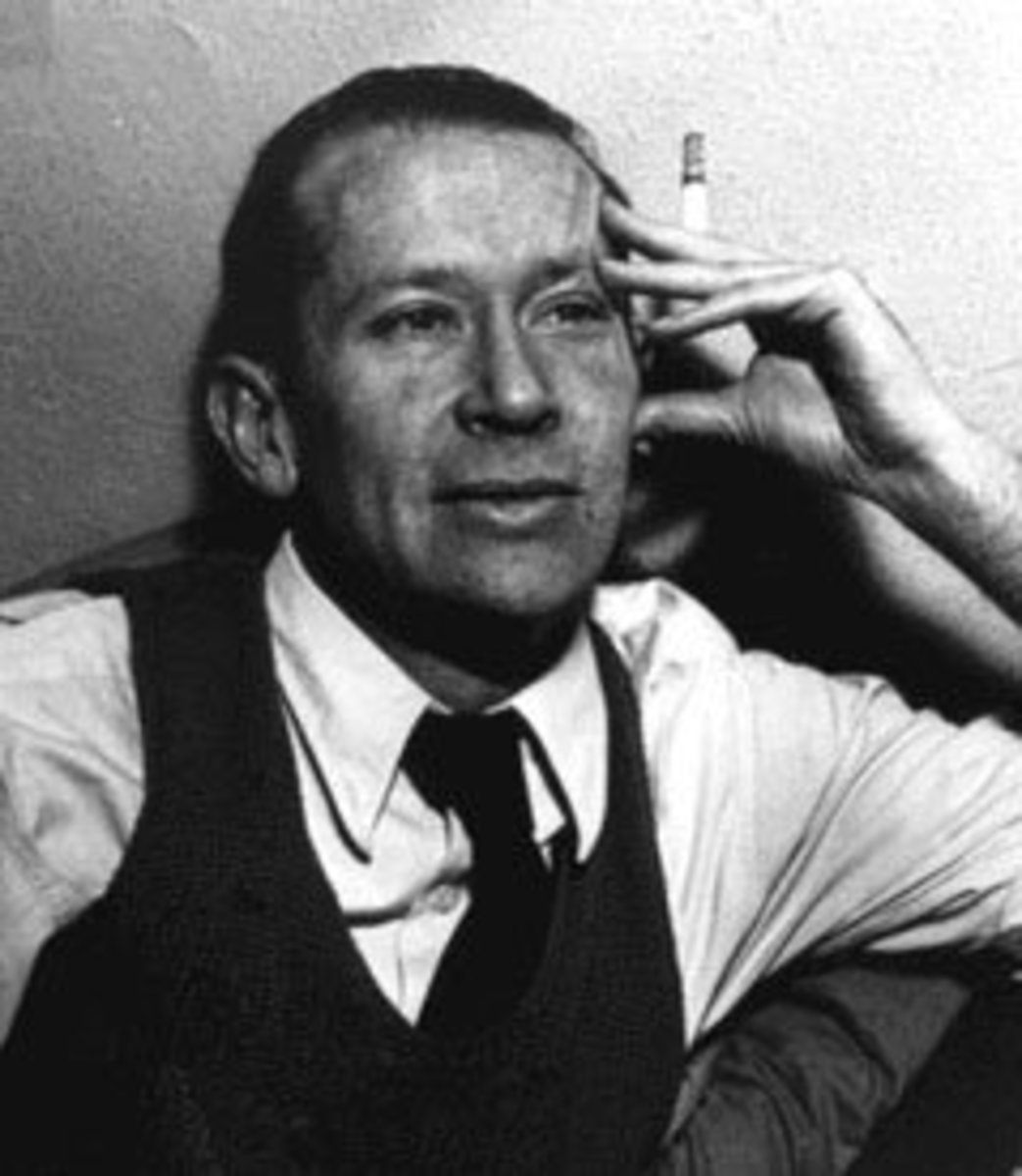
ABOUT STEVE KOWIT

Wednesday was April 1st, known to us all as April Fools Day. It's the same day that commences the start of National Poetry Month, a four-week span selected because of the famous T.S.Eliot line from "The Waste Land" that "...April is the cruelest month..." Thursday, April 2nd was the day Steve Kowit, a great poet, a genuinely principled moralist, a quick-witted spirit of irrepressible good humor and no one's fool by any means, died. The irony of how a day dedicated to practical jokes, a commemorative poetry month selected for a line written by a reactionary, racist, dour by nonetheless brilliant poet, and the passing of one of the most jubilant poets and exuberant personalities collided the way they did is inescapable, I suppose. But rather than inspecting and interpreting too closely, I think it better, more appropriate, more helpful to remember Steve Kowit as a man of many gifts, interests, passions, commitments from his own work. He superbly fused the vernacular of street rhythm with the careful and tunefully off-center ear of a jazz improviser. The images and observations he could write were often The Sound of Surprise, to use music critic Whitney Ballett's description of an improvisation that steps beyond the chord changes and achieves absolute, in-the-moment inspiration. Steve's best work had the same effect, the "wow" factor. His genius as a teacher combined that rarest thing, honest and helpful criticism intended to make a poet a better writer. As a writer, he was loquacious who favored long lines, unexpected examples of what he was talking, odd turns of thought and colorful phrase-making and high octane similes; for all is the love of chatter, though, there was cultivation, a genius for getting to the point in the seemingly effortless rhythm of a musician as he ad-libbed fine musical phrases and elegant filigrees over either the most accelerated or most relaxed of tempos. He made what he did sound simple, easy to do, but as any with a love of music and perhaps has even achieved a level of fluidity on an instrument, the aspect of effortlessness comes with practice, practice, practice. To that end, Steve was always practicing his craft, poetry, constantly honing his chops. I had always thought of Steve's poems as perhaps the best example of someone achieving the effect of someone musing out loud, thinking out loud, taking a topic sentence, a chance remark about something he had seen, heard, caught, and taking us through the dancing and delicately spun perorations of his thought as he came finally to rest, halt, at that place where there is a pause and Steve takes a deep breath and reveals how his experience of the world was altered by the event, the conversation, the book, the thing he heard or saw and thought remarkable.

 And remark he did, and for me, he was the most intimate of poets, a writer for whom someone is being addressed, spoken to, confided in.  Even if it was merely a matter of  Steve loving the sound of his own writing being resounded with the city cadences of his speaking voice, there was still the feeling that he was someone talking to you from across the table or leaning in closer to add an insight or a joke or some confidence that were for your ears alone. But for all the seeming effortlessness of making it seem as though he was talking seamlessly and without boundaries, off the cuff and unbound, Steve's writing did not, in large part, drift or wander lost in abstraction or confused association. In his workshops and the countless readings he'd given and in personal conversation, Steve talked about craft, rewriting, honing each poem until it was the most perfect expression it could be. Steve was constantly rewriting lyrics and would often introduce his poems as ones he'd been working on for months, even years. All this sounded incredible to me, a poet who was habitually writing fast and perhaps doing some minor tweaking; at first glance, all that revising seemed contrary to spontaneous expression. Later, I realize why so many poems are so good. That feeling of effortlessness in his poems was the result of hard work. Steve loved poetry too much to put his least worthy efforts into the public conversation. 

Steve was a grand champion of other poets. He had an unfailing interest in others. He was the man we needed to have around when others spoke in code, euphemism, and fuzzy equivocation. Steve told his mind and cut to the chase. He expressed his own truth, as the saying goes these days. After a pause, the conversation would begin again, invigorated by Steve's skill at pulling the covers off those things --racism, exploitation, sexual inequality, militarism--that were obscured by babble and can. He taught his students to read a great variety of poets, learn a great many techniques honed by tradition, expand their notion of what poems can speak to, and find within the styles assimilated. The techniques mastered one's own voice as a writer who may tackle the subject with wit, originality, honesty, and great beauty.


One could, of course, argue with Steve about his passionate arguments against deliberately difficult poems and what he considered the worst habits of late literary modernism--I adore my Eliot, cherish my Ashbery,  I am invigorated by the rigor of Silliman, Armantrout, and Perelman-- but Steve made his case with the same sort of lyricism he brought to his poems. It was a matter of course with Steve that he felt that beauty was the expression of experience in ways that did not obscure the event and the memory; neither theory nor sentimentality would interfere with the sweet language he used to present the travails and noise and significant and minor frustrations of existence. Steve's best writing, which was prodigious, was about love, justice, lust, philosophical ironies that reduced, for the moment, the insurmountable hackery of what life in the city throws at you. Clarity of expression was Steve Kowit's genius--as wild as his poems became, as beautifully strung out as they could get on a metaphor or a pile-up of "then-what-happened?" that had the makings of a wildly hirsute shaggy dog story, Steve was in control of his instrument. He hated obscurantism and overly literary self-referencing and insisted that poetry is about the writer's engagement with the world they lived in, worked in, made love in, laughed and cried in, and not be a receptacle of meditations on its own form. In conversation with him when I attended a workshop he conducted at San Diego State in the early eighties, I recall saying that he wasn't opposed to abstraction in poetry altogether, but that he opposed to the sort of writing that lay there, thick and more or less dormant, daring the reader to make sense of tangled syntax, private jokes and artlessly inserted intrusions from areas that offer more murk, not clarity. Poems either created the passion within the reader to think harder and deeper into the experience of their lives, or the poets failed in their Poetry was about the ear, not the footnote, not the endnote. Poets needed to be in the world perfecting their craft, not in the study writing obscurities shared with only other obscure poets. Steve Kowit seemed like a force of nature, and even now, it's difficult to imagine a world without him.

I can still hear his voice each time we meet. I can still see him smiling, leaning in close, asking me if I was still "dry," even twenty-five years since my last drink. I can still hear him telling me to proofread my poems and prose better. I can still remember him telling me to put a volume of my own work together and send stuff out to the publishers for the love of God. Life is rewarded by the energy one puts into it. "Live" is a verb, after all, and Steve's message to anyone was to for those of us with things they want to do to get out there and live a little, take a stand, start a love affair, write a poem for your parents, get a job you actually like. Good things come if you work for them.  My glancing friendship with Steve Kowit was one of my best years as a San Diego poet.

Sunday, March 10, 2019

KICKS KEEP GETTING HARDER TO FIND

Image result for hobnail boot
I stopped going to open readings about twelve years ago for a combination of reasons, lack of time foremost among them, but coming up near second was the weariness of being subjected to a continuous stream of encrypted banality. What is most striking about this collection of generalities it doesn’t sound like anyone who has learned a useful lesson nor gained an insight to a problem-filled existence. If that were the case, the reader would have the sense that some fact, independent of the narrator’s expectations, has been acknowledged and that the speaker is ready to change their thinking. That is, one would have sensed that some growth has occurred. The sort of tract that many readers come across in airports and the shelves of bookstore self-help sections, though, resemble a poem less than they do knotted strings of re-fitted clichés that lacking the value of irony or circumstantial variation.

These are more things one would say after an accompanying string of disasters and disappointments that work not to comprehend experience and, perhaps, gain a perspective on why things don’t go according to plan, but rather to rationalize and reinforce one’s attitude and manner of moving through the world. When all is said and done, Frank Sinatra said the same thing, but with more style and less pop-psyche cant: I did it my way… Not that Sinatra’s croaking croon makes this a desirable way to go through life.We are who we, sure, but a large part of being human is our capacity to change our behavior based on experience. Existence is not something you experience passively or an event that merely happens to you. It is something you participate in. One is powerless in controlling final outcomes of events, but within the larger picture, which this poem attempts to present to us, we can change our actions, we can change the way we think. In doing so, we can, more often than not, influence the results one gets. Polson, I am afraid, is ruggedly defeatist here. She may be smarter than this poem lets on, but the stanza is a dumb, hackneyed sentiment. We’ve all had them at one time or another. Most of us grow out of them. We are who we, sure, but a large part of being human is our capacity to change our behavior based on experience. Existence is not something you experience passively or an event that merely happens to you. It is something you participate in. One is powerless in controlling final outcomes of events, but within the larger picture, which this poem attempts to present to us, we can change our actions, we can change the way we think. In doing so, we can, more often than not, influence the results one gets. Such poets come across as defeatists in a Hemingway ammo belt. Poetry is fun when it is good. This was not good. 

Those who write poems, I think, are obliged to write the poems they are able to, whatever their style, and that they ought not to be surprised when they are criticized for using clichés and glittering generalities in place of real craft or inspiration. Introspection alone does make for any kind of poetry that seduces you into having a sit and staying with the page or pages until the poem (or poems )are finished, read again, contemplated, read again and gradually merged with the other noise-laden traffic that forms the walls of our considered cave. Whether the young poet admits it or not, they have a responsibility to express their inner lives in a fresh way that it’s interesting to readers in the outer world. 

Small thoughts are perfectly fine, and one need only inspect Emily Dickinson or the imagist poems of Pound or WC Williams for examples. Even the “less than earth-shaking” poem has a bar to reach; it should none the less be exquisitely expressed. Those who participate in their lives are not passive, they are engaged with it. Even the shy, weak, infirm, modest and laconic among us take pro-active roles in the directions we take and take responsibility. Most of all, there is the capacity to remain teachable, to learn from experience and change behavior and mindset; this is what keeps people interesting and useful to their fellows. Those who refuse to change their ways, to use experience merely as a rationale to reinforce ineffective methods to coping with existence, are jerks much of the time, or just irredeemably clueless. One stays away from these people and their poems.

Saturday, March 2, 2019

EMILY DICKINSON, OUR CONTEMPORARY

Image result for emily dickinson
An Emily Dickinson poem, No.443, has the cloistered poet speaking elliptically, mysteriously about her duty to her small labors and benign daily obligations in the wake of a personal catastrophe; her resolve to stick to her routine with an even greater conviction is an extraordinary will to power. Rather than surrender to grief and a long, tedious death knell, she confirms her existence by tending to the world that is left to her. It’s less than she is chained to her routine that she is liberated by them, elevated even. It’s a way to be engaged with things not related to matters of personal misfortune; through the tasks, small and inconsequential as they seem, are a boon to her. There are sound echoes of Samuel Beckett in this arresting poem, the similarities between a shared theme that we are creatures of habit, routine, and appetite that the motions we go through are the irreducible fact of our human condition.

A Beckett reader from years back was called I Can’t Go On, I Go On, and bitter-sweetly so, as it is a phrase that summarizes the dry, splintered core of the Irish writer’s worldview. Without the compelling vision, let us say delusion of an overriding ideology, whether religious, political, economic, aesthetic, life is really little else but an eternal return to repetitive functionality. Even in disillusion, Beckett’s characters do not transcend; they do not change; they go back to what disgusts them and lose themselves in reveries of a past that seems to be only something they’ve read; the redundant tasking is the only anchor in the present time. Dickinson, though, was aware of the sheer repetition of her daily tasks and took them to be the things that make this life purposeful and with a shred of meaning, small and banal her small chores might be. It is the doing of the tasks, the chores, the run of things it takes to keep her household, so that creates purpose — the well-worn existentialist notion that one accepts the consequences of one’s action through a form of creative commitment to the results — and it is in those moments, giving oneself over to a string of small matters that require daily attention, that she is engaged and for a moment outside herself, in service to something greater than herself.

The time ‘twill be till six o’clockI have so much to do —And yet — Existence — some way back —Stopped — struck — my ticking — through —We cannot put Ourself awayAs a completed ManOr Woman — When the Errand’s doneWe came to Flesh — upon —There may be — Miles on Miles of Nought —Of Action — sicker far —To simulate — is stinging work —To cover what we areFrom Science — and from Surgery —Too Telescopic EyesTo bear on us unshaded —For their — sake — not for Ours —

It is at that moment when matters are concluded for the day that our psychic bearing ebbs and we are returned again to the trembling, merely mortal flesh that trembles from the ceaseless self-awareness that one is alone and not the recipient of glory or attending serenity from on high; the mind chatters to itself, contemplating the stark uselessness of things; the more we find out about ourselves from the sciences, the lesser we seem in the grand scheme of an unknown god’s cosmos. Dickinson, the philosopher of the closed space, the metaphysician of precision, refuses to think of herself as lesser in comparison with the vast and unnervingly incomprehensible existence that lay far outside the walls of her Amherst home — this life of hers, these things in that life, were no less consequential as the rage for big ideas and larger, more complex constructions; her life was a matter of fact, of record, and it was for her to tend her minuscule bit of the world and finds with her dutiful attendance elements that link her with the larger chain of American endeavor, culture, and economy that’s locked itself in the present tense, defining itself with the tasks they undertake, the ones they finish, the new ones they begin. There is the question of Dickinson speaking of herself alone or instead turns the person into a general worldview, as in the way she skillfully switches from the first person to plural in her narration. I think that Dickinson’s subject is herself alone and that the I and we of her poems — when both occur — are interchangeable; it’s not an uncommon trait that those who prefer their own counsel and company would refer to themselves in the third person. Caesar did it with powerful effect in his De Bello Gallico. Henry Adams revived the technique in his Education of Henry Adams, and Norman Mailer exploited the style wonderfully until he wore it out in an intriguing series of autobiographical testaments. It’s a wonderful device, as it allows one the distance to speak of themselves with more intimacy and less modesty than a first-person narration might. It can also be a convenient way to ease the reader into a writer’s point of view by treating oneself as a fictional character; it eases the sting of obnoxiousness, provided there’s an attractive style. Dickinson, though, wasn’t concerned with an audience and seemed, in my reading, to switch to a Victorian plural to dig a little deeper, prod her memory a little harder. It was a technique with which she could crystalize her contradictory responses to her still universe. Nothing went unnoticed; everything was framed in the narrative distance; amazing things from the minute domain were revealed.

Where Beckett offers us a body of literature that informs us that the condition of humankind is a prison house of rote tasks performed without variation by a species that’s been harassed and hazed to a devitalized race of doddering amnesiacs, Dickinson is of heartier stock, a chronically depressed Irish cynic contrasted against a Yankee that will not lay down and die and which embraces Life however insignificant it might seem. Some junior high school existentialism creeps into this cursory discussion: The central issue comes down to the essential existential paradox, from either the spiritual or atheistic; one is ever not free, regardless of circumstances or forces that one finds themselves subject to. There is always a choice that can be made in even confined and restricted circumstances that cannot be taken away. From whom I first gleaned the idea, Sartre exaggerated in his emphasis in his attempt to undercut determinist currents thought to rule human behavior — religion, economics, biology — and insist that man is ethically bound to make his creative choices and accept responsibility for the results and consequences. He sounds a bit like the lunk-headed Ayn Rand represented this simply, and there are far subtler aspects of his thought, as you know. Still, the point here might be that Dickinson saw her closed in the circumstances in the aftermath of her catastrophe but instead, as the time to reconsider and reclaim a life that is hers and which has only the meaning and purpose she brings to it. It was her way, I read, of refusing to languish on a past she might be chained to and to free her, as well, from the anxiety of a shadow future. She frees herself by giving herself over to her present circumstances, attentive, aware, alive, small as that life might be. Small, yes, but her life, uniquely Emily Dickinson’s.

Possessing a genius for the compressed interior monologue in which contradictions are weighed  (though never resolved, really), the poet advances her belief in the probable darkness that follows death when she writes on the subject of the immortality of poetry. As with much of her work through her harbored life, there was a preoccupation with the concept that sheer nothingness awaited each of us. There was no "passing over," there was no seat next to God despite sermons and summons to behave righteously, there was no ethereal vantage point to see what writings were still read, which had been scrapped, which we rediscovered. Death was not a "state" one lapsed into as if it might be something one might come out of again; it was entirely non-being, bereft of potential. In popular regard and currency, the fate of a poet's work was to be unknown once the lights went out. She doubtless refers to her own work with these lines:


#883 
The Poets light but Lamps— Themselves—go out— The Wicks they stimulate— If vital Light 
Inhere as do the Suns— Each age a Lens Disseminating their Circumference—


She seems to assert that the poem survives if it is vital, and with that, the meaning of the poem changes with each generation that it passes through. Author intentionality is relevant only when the poet is still alive and is around to make further arguments, write more poems to expand or contract their original thesis. Afterward, what the author intended to say, what they originally meant, becomes merely historical, and the poem assumes a life independent of its author's particulars. The poem, because it is vital, is adapted and absorbed by each succeeding "lens" "circumference" it passes through; vital poems and vital literature in general are a means for which the intellectual and cultural givens of age can confirm or critique the legitimacy of their habits of mind. The text of the poem, or the author's thinking and intentions, cease being the end-all and be-all of interpretation since the work's passage through generations of readers and discourse presents a contemporary audience with something layered and laden with meanings and associations that are not easily dispensed with. The dialogues of a vital work have become as much a part of the poem as the actual words on the poet's tablet, freshly writ.

This makes Dickinson quite contemporary in her thinking since it reveals an awareness that there is no metaphysical certainty that will lock her work's definitive and final meaning into place for all time. Rather, she was aware that, seemingly, so long as a poem continues to be read, it continues to be changed, revised, altered. She would have been an interesting person to discuss reader-reception theory with. I don't mean to say that trying to grok what Dickinson is driving is impossible or useless; I think I overstated that part of my rant. Rather, I think it's impossible to read the poem in situ, by itself, sans outside references, which is how New Critics would have us take up the text. Generations of discussion and interpretation have become inextricable from a vital poem and, though one may well re-establish a poet's original set of concerns and the gestalt from which their poetics originated, that is not a place modern readers can profitably dwell for long. Our readings must engage decades of previous readings that have become inseparable from the vital work. The goal is comprehension, in terms of making a poem means something to readers beyond the poet's imagining, which means creating new contexts and criteria for relevance. That is something I positive Dickinson, always one aware of the nearness of death, had on her mind. Or something akin to it. I don't think Dickinson anticipated immortality, but it seems likely that she wondered how her poems would be interpreted beyond her life. She seems to have been of the mind that the poems, 'though fixed, as such, in the same scale of words, wouldn't be quite the same poems she'd written. Absent her voice to correct an erring view, she was aware that the poems would come to mean different things to commencing generations.


Wednesday, February 27, 2019

POEMS AND PRAYER

There are times in the middle of the afternoon after I’ve finished what I think is an inspired poem when I have the momentary sensation — fleet! is the world — that all those wonderful metaphors and inverted oppositions were given to me by God Himself. I’ve been sober for twenty years, though, and I have a strong feeling that if I ever heard God speak, he’d tell me to go ahead and have a shot of hooch. Faith I have, but not to the degree that I think a higher power uses me as a mouthpiece for his leftover tropes. The feeling passes, and I disabuse myself that poems and prayer are linked in degrees more bountiful than rare. I think the distinctions between the two things are clear and crucial, as both modes of address are for distinct purposes.The key distinction between poems and prayers are that poems are almost invariably written from within experience, and as a form, is under no obligation to detail and highlight it’s rhetoric toward any obligatory pitch or prejudice. The poet, distinct from the praying person, has the freedom to invoke God or invoke him not at all; the poet might even insist that the wonders he or she comes to write about are phenomena in and of itself, independent of anything divine. Poetry allows for the religious, the agnostic, the atheist and the indifferent with regards to God. The single requirement is that the poem meet the needs of literature, however the poet lands on the issue of the divine; what constitutes literary value, of course, is subject to a discussion that is nearly as abstruse and premised on unprovable suppositions as theology, Literary criticism might be said to be it’s own sort of religious dogma.
Prayers, in contrast, start outside human, terrestrial experience and beseech a higher power to intervene in human affairs. While poetry, in general, glories in all things human and is obsessed with the mystery of perception (finding that miraculous enough ), prayer assumes the human experience is flawed, in error, and needs a strong hand to right itself to a greater purpose. Prayer, in essence, is an admission of powerlessness or one’s situation and one’s instincts to cope with the difficulties presented; the varieties of spiritual inspiration vary and are nuanced to particular personalities and finer or lesser nuanced readings of guiding sacred texts, but prayers share a default position that human existence sans God is incomplete and in need to surrender itself to the Will of a variously described God.
It is possible to write a poem that addresses god that is not an entreaty, finding His presence in the world as we already have it, not as we think it was.”Question” by May Swenson does this.
Body my house
my horse my hound
what will I do
when you are fallen
Where will I sleep
How will I ride
What will I hunt
Where can I go
without my mount
all eager and quick
How will I know
in thicket ahead
is danger or treasure
when Body my good
bright dog is dead
How will it be
to lie in the sky
without roof or door
and wind for an eye
With cloud for shift

how will I hide?
It’s a fine poem, and Swenson is speaking from within experience, finding something wondrous in the world as it is. Her poem is about finding God in the details of this existence and does not beseech a higher power for guidelines about how to live a more righteous life according to scripture. Prayer assumes that human life, in essence, is merely an audition for a seat in Heaven. Swenson assumes we already have our seat and seeks God’s inspiration in making the place where we live purposeful and fuller. I don’t think God ordains prayers since they commence with the human subject starting a conversation with his maker in the search for guidance, inspiration, hope. Prayers (and poetry writing) are voluntary, as humans always have the choice not to pray at all and to neither seek nor have an interest in spiritual matters. God does not micromanage what human beings do.

Tuesday, February 26, 2019

INAUGARATION POEM by Frank Bidart

Poet Frank Bidart writes about the odd and confounding ritual of issuing in a new President with "Inauguration Poem", a skimpy, momentarily evocative lyric that promises to deliver a moral but evaporates on the breeze instead. Just as well, really, since these slight stanzas are murmurings instead of exclamations, whispers rather than shouts. Bidart wants to write about the unnamed expectations come to be focused on the taking of the oath. With or without the new president's hand on the Bible, the varieties of disappointment will reign soon enough; even a god would have trouble solving every citizen's concern and dissolving each citizens unease with the empty sound that attends every step. There are no laws against loneliness. This is poem dwells on the idea that what we're actually dealing with as we witness an inauguration is ritual meant to stir ghosts; the past is present and constantly influencing the future, as the sage remarked, and Bidart attempts to isolate some elements of the allure that attracts the best and worst of us. It's a collective point where headstrong notions of putting things right which have strayed off course , grossly so, in the presence of a president who'll mount an assault on erring policies and social injustice, a public that desires a change in direction, the sociopaths, the malcontents, the would-be assassins who want to strike a blow against the organized brutality the state and the institutions have made his or her world. 

Today, despite what is dead
staring out across America I see sinceLincoln gunmennursing fantasies of purity betrayed,dreaming to restorethe glories of their blood and state... 
Expectation, hope, rage, rebellion, collective will--a noisy, bickering mess trying to sort itself out and praying for consensus as the new man takes an oath to do his best. Sometimes we make the right choice, history seems to smile and matters work themselves out in ways that amaze us and perhaps make us aware of a hesitant miracle taking place. Too soon, though, our basic interest, our native centers of concern, take credit for the good, we lay blame too easily outside our sphere, we destroy Eden once again with our will to have our way.


under the lustrous flooding moonthe White House is stillWhitman's White House, itsgorgeous frontfull of reality, full of illusion


There is always the chance to start over, though, this work in progress--this is a government as the boulder we roll up the hill, only to start over once it rolls down again. That seems the center essence of democracy quite despite what Presidents have to say about it--we are and will continue to clean up the mess we've made of things, to contend with the bad hands we've been dealt, the sorry slices of pie we've been served. It's not about the getting, it's about the doing, and the specters Bidart invokes at the margins serve to compel us to keep the wretched machine humming along.

Monday, February 25, 2019

IN ANOTHER COUNTRY by Gail Mazur


Image result for gail mazur"In Another Country" is a big , comfortable chair of a poem to write, a familiar and over upholstered seat in the middle of a crowded room where the poet can plop and sink into the cushions, gaze at the books and ephemera surrounding here, musing, or rather half musing, on a snail-paced account of the week that is more wistful than touching, brittle rather than robust. Mazur has written of being dislocated before and has done some interesting things with the idea of culture shock within the larger stretches of one's own culture meeting up with minor key alienation to produce a sense of fleeting anxiety. This, though, is a return too many to the same well.The writing is shiftless, too cute--are we really supposed to think that her Houston students are such hicks that they shyly steal gazes at her mismatched shoes in the assumption that this is a fashion trend from the East Coast?-and smug. Not that Mazur is smug herself, but there is a tone and unapologetically disregard for thematic tightness where her comfort level for the details she is sifting through, highlighting and making half-formed asides about excludes the others in attendance, the readers. There's not a poet alive who hasn't written reams of poems one might consider "practice runs" or "finger exercises" that prepare one for a substantial bit of writing, and here Mazur suffers the embarrassing, albeit nonfatal indignity of mistaking her notes for a poem for the poem itself. She is a more interior designer here than poet, moving the furniture from one corner to the next, bringing in new pieces, refusing to toss anything out; someone might tell her that it's a bad habit to exhibit one's erudition in the form of formula name dropping


I sat at his oak desk trying to write,
ate at his table, holding his fork in my right hand,
turned the pages of one of the books,
then another, from his alphabetized shelves:

Mandelstam. Merwin. Milosz.
O'Hara. Petrarch. Pound.


It's fitting she ends the poem that she ends the poem with a paraphrase of an old joke relating to the mismatched shoes she stunned her Houston students with

—But those shoes, the maroon and the blue:
 as the joke goes, I had another pair, just like it, at home.

Likewise, it's likely she has a dozen poems in her files just like this one, earnest gatherings of incidental autobiography and tidbits of wit and self-effacement, some of which make it out of the drawer and fulfill a reader's expectation. This isn't one of those lucky poems. This is dizzy, torn, and mumbled, and the associative leaps Mazur tries don't make it over that yawning abyss of self-reference and land in a terrain where her subject is less private and insulated, more animated, more full of life we can empathize with.without a mention of an idea, a notion, a metaphor any of these writers have written or said offhand, let alone conducting the work to expand on the paraphrase and produce a discourse . The addition of these names to the poem's length reaffirms the amateur interior decorator analogy, as they're treated like pillows and throw rugs one leaves about a space to brighten the place up

Saturday, February 23, 2019

TONE IS KING, CADENCE IS THE KINGDOM

Image result for wc williams
I confess I was in love with my adjectives, metaphors, and unhinged diction when I was a younger man attempt to write in the shadow of the Elliots, the Ashbery's, the Stevens of the poetry world. Needless to say (but to be said anyway), I wrote many poems that could be blue-penciled into submission, as many, many of the things I composed were done on the fly, in full improvisational rant. Most of us are lucky enough to survive and learn from their youthful indulgence, and my preference in tone for my work is to be more concise, terser, more direct in my treatment of the world. It's an ongoing experiment in phenomenological terrorism, but we can conclude that my later offerings seek to get back to the data, the situation under a poem's consideration. One long for something to come from their keyboard that's less abstract and more at one with the material realm, a project destined to fail--one cannot step outside their own skin to observe oneself in their habitual habitat--but it is the attempts that are worth considering, pondering, it is the art that adds to our knowledge of the things we don't know. For others, of course, poetry is a means to classify, categorize, and index people, places, and things; it is a means to conquer the world and reduce to quantifiable data. Poetry here is means of missing the point entirely.


Sadness. The moist gray shawls of drifting sea-fog,
Salting scrub pine, drenching the cranberry bogs,
Erasing all but foreground, making a ghost
Of anyone who walks softly away;
And the faint, penitent psalmody of the ocean.

One needs to admit to Anthony Hecht's mastery of the carefully articulated tone of his work and appreciate as well the limits he observes when constructing correlatives between interior states with the material world. Not pompous, not grandiloquent, not bombastic, Hecht's poem "Despair" finds a way to make the sluggishness of the human spirit resemble the turns of the day--
Gloom. It appears among the winter mountains
On rainy days. Or the tiled walls of the subway
In caged and aging light, in the steel scream
And echoing vault of the departing train,
The vacant platform, the yellow destitute silence.
The adjectives are perfectly selected and fitted like the smaller, finer diamonds in a larger arrangement of vaguely tarnished gems, with the intent being to remind you, I suspect, that more often than not, one has found themselves caught unaware that the warm afternoon has taken on a sudden chill in just the minutes it took for the sun to take a late afternoon shift of position. It does just that, but it seems a bit false; the perception seems padded by the slightest degree. 
But despair is another matter. Midafternoon
Washes the worn bank of a dry arroyo,
Its ocher crevices, unrelieved rusts,
Where a startled lizard pauses, nervous, exposed
To the full glare of relentless marigold sunshine.

What I recognize over anything else is a world that seems to exist only for its elements--an Edward Hopper universe of subdued tones, melancholic hues, and diffuse light-- to illustrate a mood that itself seems more imagined, fanciful. The language eschews the chance to be vivid and naked with the sadness it attempts to corral and instead decorates the psychology. Phrases like "Washes the bank of a dry arroyo" or "To the full glare of relentless marigold sunshine," for me, hang there like waiting room art that is nebulous and comforting; the real experience is abstracted, obscured, defused of potential. This makes me think less of an accounting of what one has felt and found suitable expression for than a rumor of something having happened. This is the kind of language one comes upon with someone who has something on their mind they aren't comfortable exposing to an honest art. Measured, well crafted, balanced, similes and metaphors synchronized, but without a single provocative notion. You're left to admire the structure of the thing, the finesse of the inner mechanisms, and leave the poem without a hint of real feeling.

________________

The conventional wisdom is the older artist uses bolder strokes and is more selective in the techniques they use from their assembled devices and acquired skills, an appealing prospect for older poets and readers who surfeited with the orgy of earnest self-interrogation. Enough about you, already, we know it's you who's had these experiences, tell us what you see without announcing that you're in the act of seeing. I don't constantly roll my eyes when coming across a personal pronoun in a poem--that would be rude, even in private--and I will attest to liking poets who have a winning manner that mitigates their constancy in work; I am a Norman Mailer fan, after all. But not everyone is so engaging nor interesting, at least when they are the articulated persona the poetry is coming through. You often desire the more direct approach; let's skip the foreplay and go straight to the perception, the place where the new idea forms. My model is William Carlos Williams, who could, to my mind (and ear), draw a lyric from the barest of linguistic ploys. It's a clean, well-lit poem.

Spring and All 
by William Carlos Williams 

By the road to the contagious hospital
under the surge of the blue
mottled clouds driven from the
northeast-a cold wind. Beyond, the
waste of broad, muddy fields

brown with dried weeds, standing and fallen
patches of standing water
the scattering of tall trees


All along the road the reddish
purplish, forked, upstanding, twiggy
stuff of bushes and small trees
with dead, brown leaves under them
leafless vines-

Lifeless in appearance, sluggish
dazed spring approaches-

They enter the new world naked,
cold, uncertain of all
save that they enter. All about them
the cold, familiar wind-
Now the grass, tomorrow

the stiff curl of wildcarrot leaf
One by one objects are defined-

It quickens: clarity, outline of leaf
But now the stark dignity ofentrance-

Still, the profound
change has come upon them: rooted, they
grip down and begin to awaken.

There seems less of the telling-the-world-what-it-mean??s I gather from Hecht's skilled outline and sense in Williams, someone who has remained quiet and still long enough in the spaces he inhabits to have the world reveal itself. This poem is one of action, so to speak, activity, of how nature exudes and recedes with the change of the weather, how the terrain seems to wither under the severity of the cold wind and hard snow but comes to life again as the ground softens and the temperature warms a bitter air. Where Hecht, to me, reads as if he was determined to find dour inner states, Williams finds symmetry and elegance in what the passerby might consider a rough and unrefined wood; Williams' eye is sure, and his ear is tuned to the music that's already in the frame he wandered into; there was no need to busy up to his materials. Being the doctor, Williams had, perhaps, an innate appreciation of how things fit together, whether the human body, the buildings of a city that hugged a rough shoreline, or otherwise untrammeled nature itself. He is wholly aware that what he sees is already perfect before he arrives; perfection is independent of his personality and desires. There, his presence does not bring beauty to the landscape. It is his task to notice what's there, see what is in front of him that otherwise goes unseen, and notice the world apart from his ego. That is what makes Williams one of my favorite poets.

PERFECT PITCH: William Carlos Williams and Robert Frost

The similarities between William Carlos Williams and Robert Frost there , indeed, in the sense that we have two poets who have created a style of plain writing–writing, not speech, as neither poets are poets who attempt idiomatic epics– that want to get something of the grit, grime and grumble of life that previous generations of poets had theorized out of countenance, For myself, it is Williams who is the better and more bracing the two scribes, as I remember a passing remark from WCW suggesting (I paraphrase) that the thing itself is its own adequate symbol. Where systems of metaphor, allusion and simile were busy comparing this existence to more perfect orders and had essentially argued that real objects in the material world were irrelevant to the poet’s task of constructing arguments for a more perfect union of elements , Williams and his fellow travelers in Pound, Eliot, HD , Amy Lowell and a host of other nascent modernist bringing their own experience and idiosyncratic notions to the discussion, mutually agreed that metaphysics was suffocating poetry, robbing it all worth and potential to create beauty from freshly expressed perceptions; the perfect world of Ideal Types needed to be forgotten about, at least for a while, while the language poets used was reinvigorated , reapplied, basically reinvented as a creative force. The thing itself is its own adequate symbol.

Yes indeed, and this was a declaration that for the purpose of writing a poem that addresses the actuality of a scene, the phenomenological exactitude of objects and their situations, God was dead and it was the job of the new poet to get it right. Much of this imagism, a splendid but blessedly short-lived movement in modern poetry that wanted to excise extraneous words and metaphors and gutless qualifiers from poems that are tasked with getting this world and its things correctly expressed in unforgettable ways. No ideas but in things was a battle cry they might all have heard in their subconscious at one time; it rang loud, in any case.
____________________


FINE WORK WITH PITCH AND COPPER

Now they are resting
in the fleckless light
separately in unison

like the sacks
of sifted stone stacked
regularly by twos

about the flat roof
ready after lunch
to be opened and strewn

The copper in eight
foot strips has been
beaten lengthwise

down the center at right
angles and lies ready
to edge the coping

One still chewing
picks up a copper strip
and runs his eye along it.
________________

Williams was a superb, brilliant exponent of this pared-down approach; his sentences are prickly, full of splinters, a description of action that contains rhythm , movement, precise descriptions of things that give a strong suggestion that the arrangements of the things in the world are extraordinary as they are, even when they unseen by human eyes and egos that translate the experience into easy narrative tropes; what is splendid about this poem, “Fine Work with Pitch and Copper” is the lean and lyrical economy with which Williams gives us a good amount of detail; workmen on a break, the materials, and tools they are working with laying to the side, the light and time of day, the return to work, the steady hand of the workman who lifts a piece of the thing he is working on:
“One still chewing
picks up a copper strip
and runs his eye along it.”
Without fuss, commotion or straining rhetoric, Williams achieves a stark beauty, with his notion of taking his sentences and breaking them into smaller units of clear signification working subtly and directly to bring us to the startling last lines, “picks up a copper strip/and runs his eye along it.” That, for me, was a dicey image, since it suggests the grim prospect of having an eye poked out with hard, sharp, unyielding thing. But without the blathering on about courage, craft or anything else left and right intellectuals have romanticized about for decades before, Williams accomplishes one small thing that, in turn, went a long way in revolutionizing how poems come to be conceptualized. He achieves that fine balance between hard and soft things, he makes it tactile, he delivers his poem with such skilled brilliance that most readers miss it even after multiple readings.

THE SANDWICH NOTCH ROAD , TWO DAYS BEFORE CHRISTMAS by John Evans

I like this poem in theory, as it satisfies my current interest in poems that have a sparer, even skeletal structure, but Evans could have done something global here. What it does with the localization of grief--the stunned incredulity, the trudging past familiar and unfamiliar things--works well enough, but it seems to stop short. In fact, it stops right at the point when there's an opportunity for the narrator to make caste some lines of the world at large, in this time of grief, seeming spectacularly irrelevant:

Wanting to liveafter your deathis like wakingin an empty room:too much space.

I like this analogy because it hints at the seeming futility of our desires and goals when the worst thing finally happens, that the petty, homemade philosophies that gave us comfort and a sense of continuity through a chaotic world are flimsy premises once the unavoidable fact of death encroaches on one's most intimate sphere of association. This could have been a spare, concise King Lear moment, where a few lean stanzas describing the tone and mood of the universe after the bad news is learned and being processed could have brought a deeper, icier sense of psychic remove. It's not that Evans needed to add an onslaught of language to expand his view, but one does get the feeling that he was just getting warmed up before pushing his wits to another set of consideration; the entire poem reads like a set up that ends unconvincingly. Evans follows up his rich metaphor of comparing living beyond your time to waking up in an empty room with a sign off that is quick and cliché,
All day I sleep off
the crude hangover.
There is, to be sure, the suggestion that the narrator sought a temporary death through an aggrieved drinking binge, that he wanted to blot out and remove an accumulating mass of emotion that will inevitably overwhelm him and that this fits in neatly with the previous image, but it is cheap disservice to an evocative phrase. There is a point where the vocabulary could have expanded, swelled just a bit, that the metaphors could have gone beyond the tics and aches of the narrator's hangovers and dulled senses and demonstrated the external world at large, pieced together by senses that are deranged with sorrow.

I suspect Evans submitted these poems for publication too soon. While I like the style of the poem, it seems tentative; where he presents an interesting springboard to some inspired metaphors, he stops and this, I think, is the poem's failure. In the two poems you present, he is a bit talkier, and he edges closer to monologue, to prose, instead of poetry; they remind of the leaden open pages of Rick Moody's overwrought, hand wringing novel Purple America, a string of run-on misery that irritated me rather than feels sympathy for the man who must know care for his aging mother. Evans, I suspect, is still too close to his material. I am a fan of ambiguity in poems and I rail against the idea that poetic narratives, by necessity, be a righteously crafted thing that is a finished product, self-contained, which ties up the loose ends of a poem tidily the way a situation comedies end with an episode concluding laugh line. I think Evans is obliged to be honest to his emotional progression and leave this story unfinished; otherwise, it merely becomes another Lifetime movie of the week. What I didn't like was the convenient, easy, lazy bit about recovering from a hangover; it does not sound earned. Hence, I wanted more from this poem; it was building credibly, and then he stopped at the point when I think he should have pushed further. The poem is premature, I think; he should have set it aside and come back after some days had passed.

IN VIEW OF THE FACT by A.R.Ammons


Someone I showed this poem to gave back to me after reading it back the book after a cursory glance up and down the page. She asked: "where's the beef?". Then we had a beef; I liked the poem, she didn't, and we took several hours to smooth out the differences between us.
 Assuredly, more than a difference of view on what constitutes quality in free verse poems was under review , and yes, I realize that recollection resembles a scenario for a minor key spasm of-of "flash fiction" that would be doomed to see print in a small magazine that would reach the hands of  on the chronically poetic. The "beef", is Ammons' details, and the poem works precisely because of his plain speech and the emphasis on his line breaks. Ammons' narrator highlights a more fleshed out version of the same sort of subject, making the point that what comes at you fast in life are marriages, births, and deaths, in that order, in thick, hard clusters; before you know it, you're at the end of it all while the cycle continues for another generation. One descends either into cynicism and despair, or one considers themselves to have been fortunate, blessed, to have lived a life that's endured joy, failure, and every celebration and tragedy in between. Yes, this is a poem, there is no pretense about it, and it works very powerfully because of Ammons' couplet form; the prose reformatting turns this into something anyone converted to paragraph form would be, a series of run-on sentences.I like his language, his ability to keep a topic running through a myriad of associations that wouldn't ordinarily meet in a piece of writing, and I admire his utter lack of pretentiousness. This is quite wonderful.


In View of the Fact 
By A. R. Ammons 


The people of my time are passing away: my
wife is baking for a funeral, a 60-year-old who

died suddenly, when the phone rings, and it's
Ruth we care so much about in intensive care:

it was once weddings that came so thick and
fast, and then, first babies, such a hullabaloo:

now, it's this that and the other and somebody
else gone or on the brink: well, we never

thought we would live forever (although we did)
and now it looks like we won't: some of us 
are losing a leg to diabetes, some don't know
what they went downstairs for, some know that

a hired watchful person is around, some like
to touch the cane tip into something steady,

so nice: we have already lost so many,
brushed the loss of ourselves ourselves: our

address books for so long a slow scramble now
are palimpsests, scribbles and scratches: our

index cards for Christmases, birthdays,
Halloweens drop clean away into sympathies:

at the same time we are getting used to so
many leaving, we are hanging on with a grip

to the ones left: we are not giving up on the
congestive heart failure or brain tumors, on

the nice old men left in empty houses or on
the widows who decide to travel a lot: we 
think the sun may shine someday when we'll
drink wine together and think of what used to

be: until we die we will remember every
single thing, recall every word, love every

loss: then we will, as we must, leave it to
others to love, love that can grow brighter

and deeper till the very end, gaining strength
and getting more precious all the way. . . . 

WAS E.E.CUMMINGS RACIST?

A previously unpublished poem by E.E.Cummings was recently discovered by literary professor James Dempsy in the course of researching Scofield Taylor, publisher of the influential magazine The Dial. The Awl as published it, a brief, spare observation that leaves you scratching your head, a typical response to Cummings best and worst writing. This poem, though, is different; the language makes us asks if Cummings were a racist. The start of the poem gets your attention quickly:
(tonite
in nigger
street
the snow is perfectly falling,
the noiselessly snow is
sexually fingering the utterly asleep
houses)
The entire poem can be viewed here.


You can feel the hair rise on the neck of those modern critics already defensive about the politics of a number of  Modernist poets. This was another era, a good while ago, and it wasn't an uncommon thing for otherwise smart and perceptive people, Cummings included, using the word "nigger" without intending to judge and subjugate an entire segment of the population on the basis of race. That is to that I doubt Cummings use of the word was used in a racist manner; from readings of Twain, Hemingway, Faulkner and Van Vechten, the use seems more idiomatic than hurtful. "Nigger", though, has morphed in the many decades since Cummings' quizzical poem, as the history of the Civil Rights movement reveals the insane, hateful cultural undercurrent from which the word emerges. The word is loaded with the freight of every racist thought, judgment, and agenda that has been enacted in this country and it has become something that none of us can use with any authority other than to be hurtful. The other explanation for saying or writing "nigger” in light of what the word has come to mean is the kind of weak-kneed "irony", that one needs to use the word in light of the pain we allow them to cause. Lenny Bruce maintained that these are only words and it is our forbidding the use that gives them their hurtful power; expose the words and the lies behind them and we neutralize their power over our emotions. Lester Bangs, contrarily, wrote years later in an essay titled "White Noise Supremacists", that he had tried Bruce's prescription and uttered and wrote "nigger" in what he meant as irony--he was attempting to empty the term of the potential to cause pain.

Bangs, though, gauged the response of readers, editors, and friends and discovered his humanist reasoning wasn't assuaging anyone. The roots of the pain were too deeply embedded in our culture's worst sustained tendencies: this word, and words like it, hurt.  Cummings, as a poet, can be excused in part because I suspect he meant "nigger" to be a synonym for "night" or a term equally nocturnal; A quiet winter night in winter, snow on the houses, the lights are out. There is subtext s here, to be sure, the obvious ones being the sexual attraction of whites to blacks, but there are nearly always subtexts and ambiguity in poems; Cummings purpose is to create tension between terms denoting abstract virtues of black and white and force a reader, perhaps force himself, that one is drawn to the other and that , in fact, one needs the other in which to exist, thrive, to find happiness in the many layers of grief life-as-it-is will hand you. This is a reading, though, that is lost in the sweep of history, save a protest from an apologist arising here and there.  Cummings fans will no doubt make like this poem had never emerged.Is Cummings a racist for using this odious term? No. Could he have gotten away with writing this poem today? Not on your life.

Friday, February 22, 2019

T.S.ELIOT SINGS THE BLUES


Image result for ts eliot
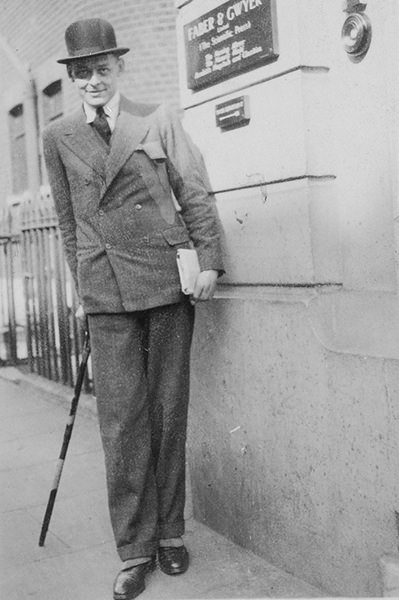
T.S.Eliot wrote in a time when the Universe seemed to be rent, with heaven and hell bleeding into one another, a career on the heels of two world wars that shattered optimism one may have had for the promise of technology to replace a silent god, is hardly different than the dread that lurks under the covers of the postmodern debate over language's ability to address anything material, or have it convey ideas with any certainty. There is simply the fear that the names we give to things we think are important and worth preserving are, after all, based on nothing. Grim prospects, that, but, I think, seeks to provoke a reader's investigation into the source of the malaise, the bankruptcy of useful meaning, with a hope that the language is reinvigorated with a power to transform and change the world. Eliot's response was real art though, and if it did turn into resignation and nostalgia for more-meaningful past times, his articulation at least provokes a response in the reader, and operates as a challenge for them to make sense of his language, and understand the complexity of their own response. This adheres to Pound's modernist ideal that art ought to not just be about the times in which it's made, but that it needs to provoke a response that changes the times: transformation remains the submerged notion. There is beauty because there is power in the imagery and the emotion behind it and it's powerful because it rings true; a reader recognizes the state of affairs Eliot discusses with his shimmering allusions and responds to it. The material does not lie, and he certainly isn't being false by saying "this is my response to our time and our deeds". Rather, it's more that one disagrees with Eliot's conclusion, that all is naught, useless, gone to ashes. Better that one inspects the power of the truth that is in the work and develops their own response to their moment. It's less useful to try and argue with someone's real despair. A depressed expression does not constitute lying. 


Eliot was not lying in any sense of the word--lying is a willful act, done so with the intent of trying to make someone believe something that is demonstrably untrue. As the point of The Quartets and his plays have to do with an artful outlaying of Eliot's seasoned ambivalence to his time, the suggestion that "beauty lies" is specious. One has the license to argue with the conclusions, or to critique the skill of the writer, but the vision here is not faked dystopia Eliot contrived to a good amount of trendy despair--that comes later, with artless confessional poets who lost any sense of beauty to their own addiction to their ultimately trivial self-esteem issues. Eliot, however, one views him, sought transcendence of what he regarded as an insanely short-sighted world, and sought to address the human condition in a lyric language that has, indeed, found an audience that continues to argue with his work: the work contains a truth the readership recognizes. Eliot was following suit on the only prerogative an artist, really, has open to them: to be an honest witness to the evidence of their senses, and to marshal every resource in their grasps to articulate the fleeting sensations, the ideas within the experience. This is the highest standard you can hold an artist too; any other criteria, any other discursive filter one wants to run the work through is secondary, truth be told because the truth within the work is the source of that work's power. One needs to recognize what it is in the lines, in the assemblage and drift of the lyric, in the contrasting tones and delicate construction of vernaculars, what is that one recognizes and responds to in the work, and then mount their response. 

There is more to the Four Quartets or the plays than what assume is an admission of defeat in the hard glare of uncompromising, godless materialism--there is hope that his work inspires future imagining greater than even his own-- but I cannot regard the poems as failures in any sense, even with the admission that there is great beauty in them. Eliot renders his consciousness, his contradictory and ambivalent response to the world he's grown old in with a perfect pitch, and it's my sense that his intention to provoke the imagination is a sublime accomplishment. As craft and agenda, the later pieces work. 

What does Eliot's despair have to do with postmodern writers and writing? It's less about what one can call his "despair" than what his operating premise has in common with the postmodern aesthetic: Eliot, the Modernist poet extraordinaire, perceives the world the universe has to have any sort of definable center, any unifying moral force formally knowable by faith and good works. There is despair in the works, behind the lines--one responds to them emotionally and intellectually--and the power behind the images, the shimmering surfaces the diminished, de-concretized narrator feels estranged from, comes from a felt presence, a real personality. Eliot, though, turns the despair into a series of ideas and makes the poetry an argument with the present day. There is a pervasive sense of everything being utterly strange in the streets, bridges over rivers, strangeness at the beach, and we, it sounds, a heightened sense of voices, media, bombs, headlines competing for the attention of someone who realizes that they're no longer a citizen in a culture where connection to a core set of meanings, codes and authority offers them a security, but are instead consumers, buyers, economic in a corrupt system that only exploits and denudes nature, culture, god.

Eliot conveys the sense of disconnection rather brilliantly, reflecting the influence of an early cinematic editing styles: Eliot is a modernist by his association with the period, though at heart he was very much a Christian romantic seeking to find again some of the scripture’s surety to ease his passage through the world of man and his material things. There has always been this yearning for redemption of purpose in the vaporous sphere, and much of his work, especially in criticism, argued that the metaphysical aspect could be re-established, recreated, re-imagined (the operative word) through the discipline of artistic craft. Modernists, ultimately, shared many of the same views of postmodernism with regards of the world being a clashing, noisy mess of competing, unlinked signifiers, but postmodernism has given up the fight of trying to place meaning in the world, and also the idea that the world can be changed for the better. Modernists, as I take them in their shared practice and aesthetic proclamations, are all romantics, though their angle and color of their stripes may vary. Romanticism, in fact, is an early kind of modernism: the short of it is that there is a final faith in the individual to design of the world, and in turn change its shape by use of his imagination 

Eliot's turn to religious quietism isn't so surprising, given the lack of self-effacing wit in his writing that might have lessened the burden of his self-created dread of the modern world: a tenet of modernism, shared by any writer worthy of being called so, is that their work was to help the readers, the viewers, the audience, perceive the world afresh, from new perspectives, in new arrangements, to somehow help get to the "real" order of things behind their appearances, and, understanding, change the world again. Temperaments among poets varied as to how they personally responded to their need to live aesthetically--and in all cases, living aesthetically was a viable substitute for a religious rigor--Stevens chose his Supreme Fiction while being an insurance executive, Pond toyed with fascism and economics, Joyce opted for a life in the eroticized parlors of France and Britain, Williams found connection through his medical practice and biology, related, absolutely with his poetry. 

Overall, what keenly separates the modernist engagement with meaning creation was that it was the things of this world, this plain, this material reality, that were the things that would help us transform individual perception; the thing itself is its own adequate symbol. A nod to Husserl and phenomenology, the meaning of things in the world, as things, was mysterious indeed, but their form didn't come from the mind of a God who, at best, was an absentee landlord. Eliot, though, sought religion, and I don't see that as a failure at all: the work is too powerful to be regarded as either a personal failure if that's a claim one might nor as a poet. Eliot, as you say, is a poet of ideas, among other things, but ideas are useless in a poem unless they're seamlessly linked with an emotion, an impulse, and it's possible, I think, to see where the work was going: the kind of world Eliot described, with the kind of intelligence and personality that described it, was a bleak and unlivable sphere, requiring a decision, to commit to something that supplies meaning, fits the personality that needs direction.

 I don't regard Eliot as an artifact at all: I've commented previously on how the work still inspires readers to engage the world in new ways: he is a permanent influence on my work as a poet. The early modernists rejected the romantic label--for a variety of reasons. I'm sure they had good reasons, but Modernism, in many respects, is an old project with a new label. Can we really place Joyce and the Futurists and Eliot and Pound and Yeats and Gertrude Stein, Hemingway and Fitzgerald in the same box? Yes, but it is less of a box and more of a tent; there is a lot more room to move around in.

ASHBERY'S MURMURING AUTHORITY

I've thought for years that the best way to read John Ashbery's poetry is to first throw the instruction manual away and then go for a fishing trip in his various lakes of opaque meanings. Literally, imagine yourself in a boat in the center of a large body of water and cast a line into the water, and then reel in what pulls and makes the line go taut. Whatever comes up is always a surprise, unexpected, perhaps a tangle of things that wouldn't be bound together or linked in any conceivable but in the dreamy but sleepless realm of Ashbery's actively processing mind and attendant imagination. This might be the closest an American writer has ever come to transcribing the language of their thought process; for all the conventional wisdom about Ashbery's associations with painters, French surrealists, and the rush of popular culture, he very closely resembles the method of Virginia Woolf and the still engaging, if the topically staid process of stream-of-conscious.Ashbery's poems are filled with much of the material world, both natural and manufactured, fashioned, contrived, and constructed by human agency. In both Woolf and Ashbery, the central voice, the observer, distanced or not, renders an image, makes it solid and substances, gives it attributes and distinguishing nuance, allows the thing to be played with as the mind associates, puns, constructs parallel universes and contradictory timelines; sections of books, a cold cup of coffee on the magazine, a painting under a cloth, shorelines are seen from Italian villas, comic book heroes and the breathing of a grudgingly referred to "you" who is voiceless, without input. I was aware that Ashbery was an adherent of Wallace Stevens and his notion of the Supreme Fiction, a reconfiguration of the tension between Idea and physical expression to the senses. But where Stevens constructed grand rhetoric to address the generic formulations of every day--his poems often sound like critiques of a reality that is inferior to a divine Idea that makes their formation possible--Ashbery makes more informal, casual, and brings the distanced bewilderment to street level. There are glimmers, glimpses, observations, and sightings of the physical detail that assure you that you and Ashbery live on the same planet. Yet, at precisely the moment you come to a reassurance, these details blur and merge with the spillover of many other chats and conversations the poet seems to be having. The poems are not monologues, and one cannot call them a "medley of voices," as Richard Poirier had referred to in Norman Mailer's Why Are We In Viet Nam?. "Medley" implies an orchestration of unlike parts made to harmonize, to make sense in ways that give pleasure. Ashbery's voice is singular, his own, and what comes from his typewriter are whatever arguments, debates, interrogations are rumbling through his consciousness at that given moment. While Ashbery is capable of the well-turned sentence and even sweet music on occasion, his aim isn't to give pleasure but rather to make the ordinary and nettlesome extraordinarily weird. It's not that his poems are any more accessible than Stevens--his less daunting syntax actually seem to make his poetry more demanding than Stevens'-- but with patience, we can comprehend a language we might actually use, a voice that could plausibly be one we would have in those moments of lost thought, daydreaming, vague yet intense yearning when there is so much we want to bring together for a moment of clarity but are frustrated to find that our senses keep changing along with the world they behold. Ashbery is the central poet for many critics whose projects intend to lay out the rise of urban Modernism in American verse. Marjorie Perloff is someone else worth mentioning as much of who she deals with are city poets, worldly, college-educated, unashamedly bookish, and unafraid to employ a more vulgar popular culture, IE comic books, movies, advertising, along with the more swank and sophisticated allusions to high culture, whether literature, opera, theatre, painting. A connecting thread through much of the poets emerging after WW2 was their ambivalence to the plenitude of culture and media--Dwight McDonald's derided mass culture--and began, in their individual endeavors, to fashion particular styles to sift through the cultural dumping ground each of them was witnessing.

Elizabeth Bishop is exquisitely hermetic in her verse. She is much closer to the qualities Stevens praised for poetic surfaces calling their own form into question, and James Merrill, who was something of a virtuoso in sustained, whispering elusiveness. One sees why some of the poets of the New York School receive more attention from readers and critics, especially the work of Ashbery and Frank O'Hara (and to a lesser degree, the wonderfully digressive poems of Ron Padgett); meanings and intents about the growling contradictory messages of physical reality are dealt with as unresolvable conditions of existence in work, but the point is how the poet is engaged with their world. It might be said that Ashbery's work makes no sense and conveys a sense of witness to an ever-blooming enlargement of perception. The poetry of the New York School was, in essence, about talking about the world as it unfolded, an attempt to give a cadence and rhythm to the kind of personality which bears witness to the confluence of sight, sound, and smells. This is a fitting rite for a city that is in your face, traffic lights, pedestrian density, and raw-lettered advertising, the moment you step out the door of your apartment building; everything is seemingly noticed, nothing is trivial, everything is a part of the story. Sheer meaning, hard and fast, is not be found here, but feeling, resonance, introspection are. It is this several layered ambiguities that keep a reader up at night, staring out of the window, testing the keyboard as ideas about what we haven't thought about coming in phrases even God himself couldn't explain. O'Hara is not so oblique or confusing--he is popular precisely because he has the lyric capacity to merge his far-flung loves of high and low culture and still carry on a rant that achieves a jazzy spontaneity--he is the poet from whom Billy Collins has taken from and tamed for polite company. Ashbery is the stroller, the walker in the city, the flaneur, the sidewalk engineer examining the city in its constant self-construction, composing poetry of association that accompanies a terrain of things with inexplicable uses. What seems like a mighty muddle in his writing becomes full engagement of a personality in love with what the senses bring him; at his best, the intelligence of the poems is transcendent, and there is, in the main, a tangible joy in how he phrases his reactions, responses, and retorts to a world that always seems to baffle him in some wondrous way.