Wednesday, August 28, 2019

THE GREAT AMERICAN PROSE POEM

THE GREAT AMERICAN PROSE POEM 

There is much crossover between prose and poetry forms in contemporary literature, which one can read about in David Lehman's excellent anthology The Great American Prose Form. What he argues in his comprehensive introduction is that we need to rid ourselves of the idea that postmodernism was the advent of writers blurring genre boundaries and realize that writers, poets, and prose writers both, have been mashing together the forms for quite a while; rigid ideas of what "poetry" is should be loosened because of the way the better (and lesser poets) of the day compose their verse won't obey some one's global dictum. 

The marvel of the anthology is that the selections contradicts the general assumption of casual fans of contemporary poems--those readers who haven't much knowledge of American poetry besides a blurred and indistinct knowledge of the Beats--is that the prose poem, as a form, isn't a radical and irreducible avant-garde gesture only recently dropped on our country's credulous readership. (Although we could use more bomb -throwers and trashers of tattered form to allow us to sharpen our wits, collectively, or at least argue constructively about what matters when we use words to describe events and things and feelings about the world we attempt to navigate with a minimum of the meanness of spirit). As the subtitle insists, it begins roughly with Poe with his many effusions that roamed beyond his Gothic decadence and wondered about the metaphysical of the universe that is always striving to balance its harmonies against man's self will, and taking us through the chatty  and unarmored paragraph-based lyricism of coming generations, a  diverse collection from TS Eliot, HD, Amy Lowell, Billy Collins, Gertrude Stein, The Beats, Leslie Scalapino, Michael Palmer, an impressive roster of writers, scribblers, musers, ponderers and poets all who've found themselves , at various times, realizing that even the relative freedom of "free verse" was not enough to extend language beyond the limits of what a sentence can quest to uncover and address and turned to the paragraph, that block of sentences on which our most exploitable accounts of what we experience in the world we explore and attempt to drive into the deepest parts of their individual mysteries. 

 This is not the paragraph that instructs, enlightens, persuades, berates or conventionally seduces, it is the paragraph as poetic expression, the act of taking what is otherwise commonplace and otherwise banal in the world and subject to a scrutiny and interrogation that might reveal a dualism otherwise obscured, or perhaps expose a universe of dualism that multiplies and continue to do so until we stop looking for them. Styles, cadences, idioms and such vary greatly here among the writers  according to their backgrounds, regions, gender , and each pen to paper, each finger to typewriter eye, each attempt to take what one knows and test against what is not already cast  in one's vernacular is a journey surprising, passionate, chaotic, incoherent and vital in keeping our language relevant and, shall   we say, self-correcting when another era's metaphors cease to give us light and instead are grown      over with such foliage that only a noxious shade is available to   us.

Saturday, July 6, 2019

The poem ""If Marriage is a Duel at  10 Paces" by Traci Brimhall is  less a ritualized settling of grudges than it is a supremely phrased and acidly etched sequence of couplets lampooning the hackneyed metaphors that apply to timeless institutions .Absurd comparisons between marriage and something other. Brimhall seems to draw from a period of having to listen to platitude-dripping testaments from husbands, her own and likely the remarks of other nervous men, who needed reassurances about the stability of the contract with bromides and sage cliches that were a form of emotional blackmail. Brimhall takes up the game and posits her own thinking , mimicking the analogies and interrogating the logic; every statement contains it own contradiction and counterargument."


"If marriage is a war for independence, I’ll find a feather 
for my cap and shoot you from your horse. Darling. 
If it’s a hunt, salt and cure me. If it’s a plague for two, 
my dear, let’s quarantine ourselves in the cemetery wearing 
aprons and snakeskin belts. Let’s disfigure each other 
with praise. My beautiful. My fugitive..." 

There is a tangible anger at the entire "'til-death-us-part" solemnity of the wedding vow , which sets the poet up splendidly for an extended take down of the premise. There is , of course, the issue that this only one side of the story and what we lack is a complexity that would make this poem even more dynamic; honestly, that does not bother so much if because Brimhall gets the tone and the poking-finger earnestness of the stream right. The story that happens offstage, that is unmentioned during this narrator's confession of resentment, is palpable, conspicuous by the lack of reference. Anger, frustration, bristling irritation has given the tongue , or at least the mind, an articulation it may well not had seen  before. 

The strength of this power, its power , in fact, is that the poet simulates the verbal dexterity a long brewing dissatisfaction can give you and which comes out in one especially articulate explosion of well-turned sarcasm. Reading this made me think of those times when I had entered someone's living room by invitation only to get the sense that there is a narrative under the subterfuge of polite chatter and mannered hospitality, that at any second the lid might blow off the pressure cooker. This poem is one of those moments when it finally does.


This is a caustic rant and it would be a fitting speech for a character in a yet to be written play ; the wife, fed up with years of her husband's laziness, stupidity, infidelity , financial irresponsible and an over reliance on the easiest phrase that comes to mind when justifying his onerous acts, responds at once with bazooka and blow torch. There is the neat, efficient trick of mocking with great exaggeration while revealing the harm cliches, evasions and lies cause, as in "let's disfigure ourselves with praise..." While the truth sets you free by liberating you from falsehoods that coerce you into making terrible decisions, lies mar the landscape, destroy trust, create unhappiness for all those involves, makes it a requirement that one carry equal amounts of dread, self loathing and resentment under a cracking veneer of calm resignation. 


Brimhall's poem starts from the point where her narrator seems to have dropped the last dish to the floor, stands straight, hands on hips , and begins a thorough dismantling of each lie she participated in. This is a powerful poem, unusual, punchy and full of a crackling good wit. This is a warning to readers to not flatter their spouses with the foul essence of stale sentiment , promises and vague assurances that destiny will be great if you just stay the course. Talk long enough and you will create the verbal rope that will coil around your neck even as you speak the words, or someone speaks them back to you

Monday, July 1, 2019

COMING THROUGH LOSS

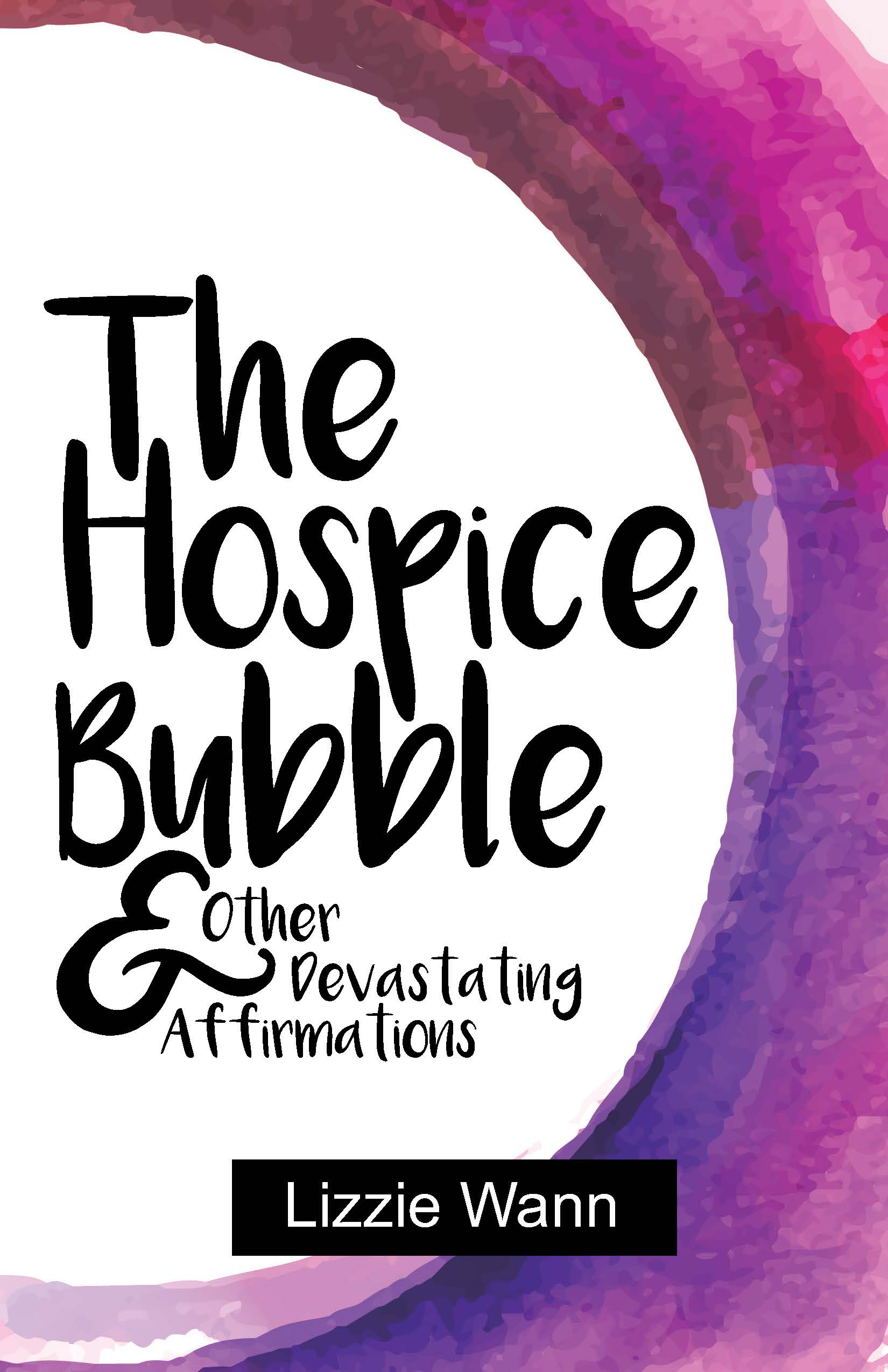
Image result for the hospice bubble
THE HOSPICE BUBBLE
& Other Devestating Affirmations
poems by Lizzie Wann
Witnessing the decline and eventual death of a parent is the surest way to send any of us into the deepest well of depression and morbid reflection. Few of us handles it with quite the grace we might have hoped for.  Shock,  grief, guilt, recrimination are only some aspects the lot of us go through when our parents are suddenly, rudely absent in our lives. We try to make sense of it all, of the choices we've made and the things we've done. There is, it seems, no meaning to find behind it all other than the acceptance of the fact the clan is smaller now and that our lives go on.

Lizzie Wann, a very fine California poet with a sharp sense of the telling detail and lean cadence that conveys underlying emotion and tone, has an engrossing new collection of poems in which we witness her going through the death of her father. The Hospice Bubble and Other Devastating Affirmations.  A sequence of poems of how she cared for her dying father up to the inevitable final day, Wann fearlessly records the days , the incidents, many small and painstaking matters as the days wore on, through surgeries, meals, bits and pieces of final conversation, there is a palpable tension in these lines. There’s no need for the Big Language. Wann is too good a poet for gaudy special effects. She lays bare her ambivalence about her father's decline. These poems are not the grand slam and over decorated summation of what one has discovered about themselves at the end of the trial; Wann’s triumph is in her spare, uncluttered impressions. Throughout the poems that comprise the title sequence, Wann writes with the concision of Hemingway and the chiseled elegance of a Lorrie Moore. Lizzie navigates these narrative fragments with a sure foot even as the ground beneath abruptly shifts. There is a strong sense of someone who’s on a new emotional territory, having her wits and resources challenged, tested.  Each poem yielding some small piece of hard-won insight.  It is the ultimate irony. Her father helped come into the world, and now she is helping him leave it. The poet doesn’t rely on the convenience of easy irony. As splendidly recollected in the piece “Winter Solstice 2017”, what she finds isn’t just making his passage comfortable, but finding out how deep her love for him has deepened, the love of a daughter for a father. While in a hospice, her father tells her of a decision he’s made.

Winter Solstice 2017

on the longest night of the year 
my father said he was ready to die
 his decision was both shocking & comforting 
we had talked on the phone earlier
he was desperately tired
it was different than other times
sitting beside him in his hospital room …
my mom on the other side, he said, 
“I’ve made a decision.”
I took his hand, his skin soft & thin, 
“I want to go home, be done with this,”…
he gestured with his other hand to show 
hospital, machines, gowns, fluorescence 
“I want you to talk to them tomorrow.”

This could seem a cold observation of Wann’s way of writing through these momentous events, but I think it’s a worth mentioning this writer’s efficiency. No casual word- slinger throwing words at a page to see what sticks to the wall, she avoids easy allure of wallowing in her misery. Blessedly, Lizzie Wann as well doesn’t of offer unrefined introspection more appropriate for private journals rather than a poetry volume.  Like a fine musician who has learned the art of note choice, she chooses her words wisely. Knowingly or not, she is composing with Ezra Pound’s notion of writing to the rhythm of the musical phrase and not the metronome. This makes her poems powerful and lyric, poetic in ways a reader doesn’t expect. Pound’s fellow poet William Carlos Williams worked for a verbal quality to his poems, as close to Spoken Language as the imagination would allow.  Wann has that in her poems, a rhythm and a flexible emphasis that conveys a mind’s hesitation, the rush of sensation, a sudden flash or sorrow or swift and brief elation. What I’ve always admired about Lizzie Wann’s poems is the sense of something bristling under the surface of the written lines, a confession, a fleeting insight, a secret struggling to emerge. “Winter Solstice 2017”, she accounts for speaking with the family, the doctors, conversations matters intimate and private with her father. She returns home finally, still processing the profundity of her father’s request. At end of day, she slips into needed sleep. Wann is at her best her, deeply, lyrically moving , beautiful in its elegantly unadorned honesty:


…that night, I slept in his bed, 

but not before I examined his room, 

opened closet doors
 took a picture of his shirts 
tried to sleep but could only see 
a family vacation to Yellowstone
 where he threw my child body into the air 
so I could see higher, how I was surprised 
then delighted by his spontaneity 
the thrill of the toss, how he caught me 
did it again, laughing my daddy laughing 
unburdened
but not before I examined his room, 
opened closet doors
 took a picture of his shirts 
tried to sleep but could only see 
a family vacation to Yellowstone
 where he threw my child body into the air 
so I could see higher, how I was surprised 
then delighted by his spontaneity 
the thrill of the toss, how he caught me 
did it again, laughing my daddy laughing 
unburdened


I ought to emphasize that the 25 poems that make up the title suite of 
The Hospice Bubble and Other Devastating Affirmations aren't relentlessly dour or respectively bittersweet in tone. The sequence is not necessarily in order, and have the quality of a mosaic, poems composed as different memories sparked different ideas and moods. Meals, chats, frustrations small and big, the irritations minor and major which stress the limits of one’s willingness to go on, area highlighted in the selected poems. There is a subtle wit that underscores the pilgrimage , suggested in this volume’s subtle by the phrase “Devastating Affirmations”; this passage is both curse and blessing, a tragedy that transforms a life with a blunt inevitability, but an event that provides the opportunity for every woman and man to become the adults in their expanded household. Samuel Beckett, the poet laureate of perennial stasis, moaned famously, to paraphrase,”… I can’t go on… I’ll go on,” a phrase mimicking the collective grunt of a common man getting out of bed with a conviction that the crushing burden of life on its own terms, the daily grind, is insurmountable and unending: they can’t take it anymore.  And yet man, the woman, showers, shaves, has coffee and leaves the house to do battle again, finding, for a moment, the will to engage again. I believe Wann has a more interesting journey; through her efforts to aid her father with his pain and eventual death, she becomes who she is. 

Other affirmations, not so devastating, are also dealt with in his potent book, those being deaths, depression, writing, love, matters she writes her way through. I sense a writer who picks up the pen to find out what she thinks about the people, places and thinks which continue to make days and nights something less than serene glide. What arises as I read the poems was the faint but pulsing rhythm of hope, not so much the typical glad tidings imprinted on bumper stickers and corporate greeting cards, but rather a recognition that all this misery, labour, all the toiling in attending to final days and hours of a parent's life is a process of discovery of one's aptitude to navigate personal tragedy's rocky stream. Life continues, one's wits were sharpened, one's eyes have adjusted to the dark that shrouded their life for a time, and the sun arises again, the wind blows, the air smells sweet.  Wann writes about many small things in a big way, a writer fascinated with being alive in the world.

To end , lets consider a short poem, the last piece in the book:


Emergence  

 a fingertip 

a strand of hair
 an eyelash
 my pinkie toe 
 ever so slowly 
it seems I may just find 
my way out 

Sunday, May 19, 2019

Aquarium

The Aquarium
poems by Jeffrey Yang

The book's conceit, an appealing one, is to write a series of poems on the fish and other ocean creatures one would come across in an aquarium, in alphabetical order. It's a sort of involute indexing of whims and amusements that would soon get ragged with repetition in heavier hands, but Yang's touch is light and varies his approach, creature to creature, and what his musings land on, of course, are continued inquiry into how we know the world.

We mirror, we model, we mimic, we claim credit for all the nobility that happens in domains that are, in fact, alien to our cities, countries and cultural ambiguities that Yang has the pleasure of gentle yanking our chain. As usual, the real issue isn't so much the wonders of sea life as exhibited--and the phrase ''exhibited underscores the problematic nature with which human languages address the external world as if it depended on our giving it narration--as it is something else altogether.
There is great appeal in the work of poets who can artfully contain a series of ideas in a brief piece of verse, the goal is to turn philosophical precepts into the glittering surface of a poem’s allure and still address an issue quite beyond the more comfortable subjects of beauty or an aesthetically constrained idea of Truth, capital “T”. Jeffrey Yang’s first collection, An Aquarium (Graywolf Press) is a series of poems that at first seem like they concern themselves exclusively with ocean life; indeed they do, but the author is shrewd in seeing what other areas, outside the aquarium tank, these creatures touch upon. Yang offers up a view on how we think about things. Here, in the poem" Parrotfish", the creature is nearly lost as the poems start like the first sentence of an encyclopedia entry and quickly turns into a bit of cocktail chatter seeming between artists, secret agents, and critics, all of whom sacrifice the subject in favor of extending their rhetorical devices.

Parrotfish
The life phases of a parrotfish
are expressed in colors.By day,
the parrotfish replenishes coral reef
sands, and by night spins
its mucous cocooned-
room. Is this art's archetype
abstracted from politics?
Picasso thought abstraction a cul-de-
sac. The CIA loved Abstract
Expressionism. Hockney: "I
don't think that there is really such a thing
as abstraction." Langer:"All genuine art
is abstract."
What do you think parrot-
fish?

I think the aim is to undermine the insidious intent of rhetorical questions that frame ready-made political assumptions. The question in "Is this art's archetype abstracted from politics" forces agreement from the reader through it's a disingenuous appeal to a person's vanity, from which an argument may be made for agendas that have little to with art, parrot fish, or life in general. This is the use of language that treats the things in nature as if they were symbols, real or potential, for great oppositions at war in an unseen metaphysical realm.

Yang seems aware that there is a very human tendency to regard the world outside our senses as though it were a linear narrative being played out, with virtues reducible to good v evil, beauty v vulgarity, honesty v criminal intent being the principle extremes in play. The narrative form, the storyline, is a convenient way of making the raw experience comprehensible, but taking a cue from Heidegger's work in phenomenology, Yang would have us be aware that the parrot fish and its environmental niche are not abstractions of anything but rather expressions of their own life. "Back to the data", as the man said and, in the choice phrase of the confounding Ezra Pound ," the natural object is already the adequate symbol".


He follows the erring assumptions to an unusual but logical conclusion: the symbol of beauty and abstraction must surely be brilliant intellectually, and so must, by default, have an opinion of the matter. He places us in witness to an absurdity: intelligent men, seduced by their nuanced sophistry, asking a fish for an informed opinion. Yang seems to me to be making fun of the way we call things either "beautiful" or "abstract"; for all the sophisticated and nuanced reasons critics, theologians and agents of intrigue approach the subject, the competing philosophies all fall short, far short of articulating something truly tangible. The irony is that the embodiment of all this speculation, the lexicon-heavy guesswork to a thing's essence, is not aware that it is beautiful, abstract, or is somehow an embodiment of a set of ideas that are meant to change the world. The parrot fish isn't even aware that it's a parrot fish, which is entirely the point--it is too busy being part of the rest of the underworld. Unlike human beings, who are continually trying to separate themselves from nature so that they may subjugate it a little more


Thrive as we might, we are lost in our self-consciousness and cherish the sort of autonomy one might perceive in the creatures swimming their currents, inhabiting their niches, living survival and death in the same fluttering of a gill. But beyond this, Yang streamlines his erudition--these aren't lectures, these are lyrics that are broadened or collapsed as the idea determines. An admirable effort by a writer with a composer's ability to embrace the ambiguity of form with a coherence of flow.